
Key Points:
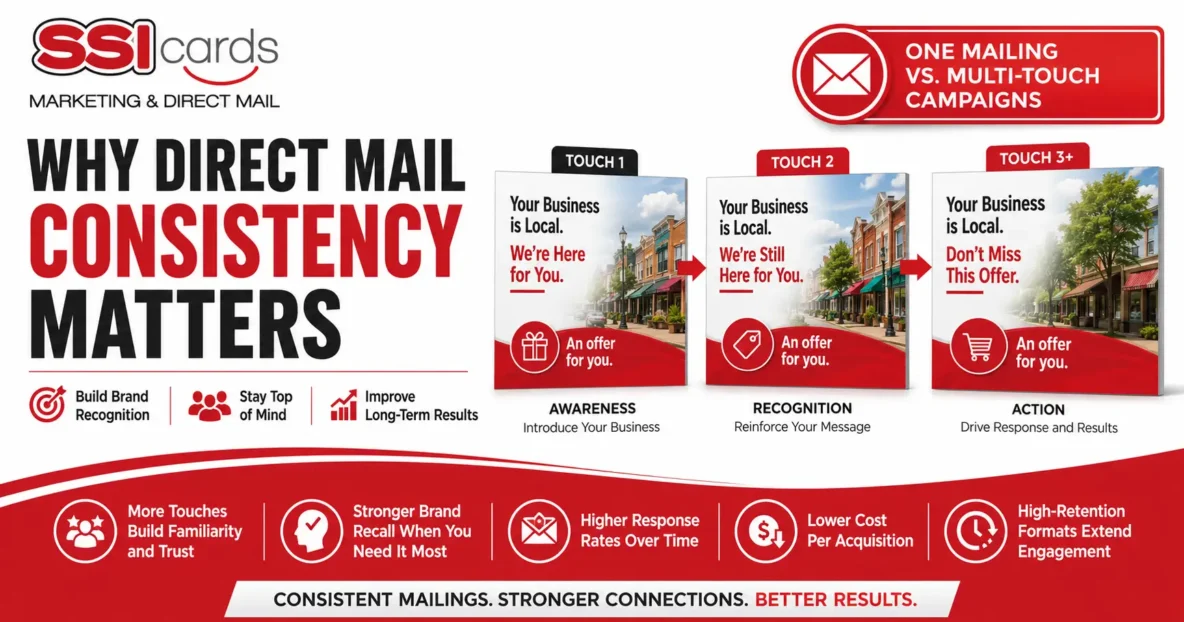
- Consistent direct mail marketing builds stronger brand recognition and long-term customer response.
- A well-executed single mailing can perform well, while multi-touch campaigns often improve long-term results.
- The right direct mail cadence helps businesses stay top of mind without overspending.
- Multi-touch direct mail campaigns give more opportunities to refine messaging and improve ROI.
- High-retention formats improve and extend engagement.
- Research shows physical advertising can create stronger, longer-lasting impressions than digital advertising.
A single direct mail campaign can generate attention, but consistent direct mail marketing is what builds recognition, trust, and long-term customer response. Many businesses judge direct mail based on one mailing, even though a well-executed campaign can produce excellent results. Consistency builds on that success by increasing familiarity, brand recall, and long-term response. Direct mail consistency is a key part of a broader strategy. Businesses evaluating targeting, offers, design, and planning can also review SSI Cards’ complete guide to direct mail marketing for local businesses.
Why Many One-Time Mailings Underperform
Most traditional direct mail campaigns do not achieve their full potential from a single mailing. A one-time direct mail campaign competes for attention in a crowded mailbox and arrives without prior familiarity. Many recipients set it aside intending to review it later, only for it to blend into the background or be discarded. Industry benchmarks from the 2025 ANA/DMA Response Rate Report show direct mail continues to generate measurable response rates, although results vary based on audience, offer, creative, and campaign strategy. While a single mailing can perform well when format, offer, and audience align, ongoing campaigns provide more opportunities to reinforce recognition and build long-term response.
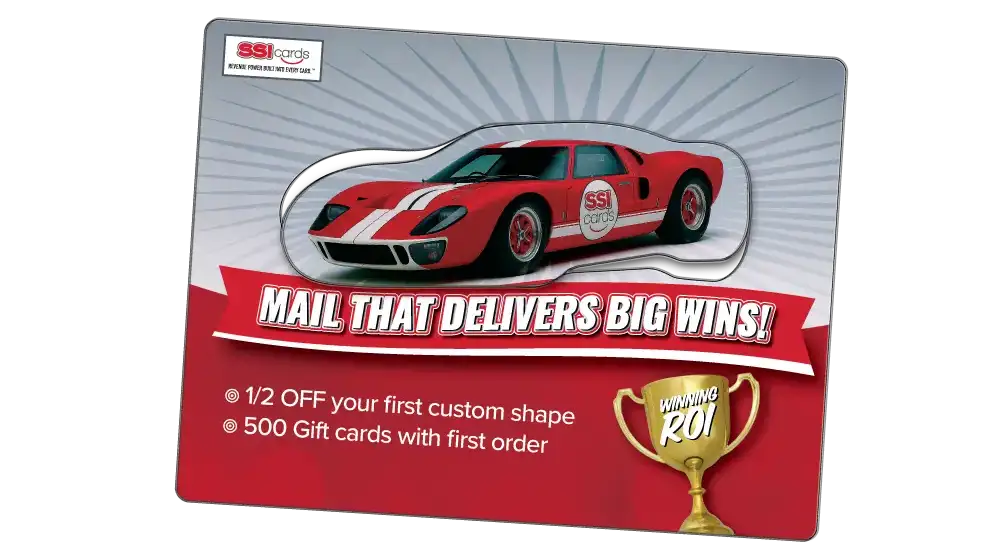
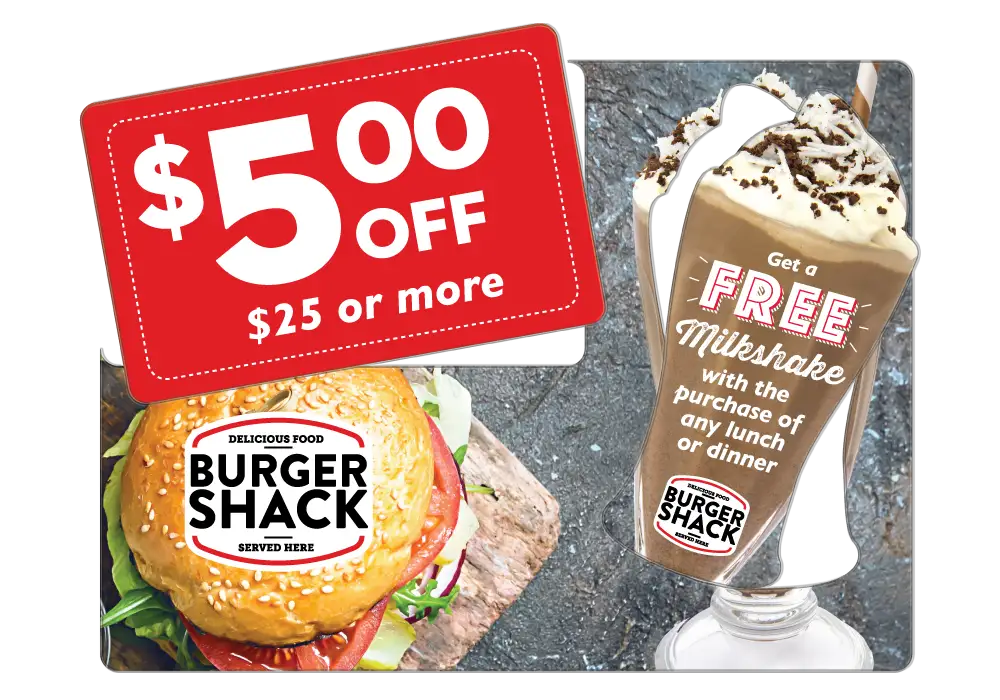
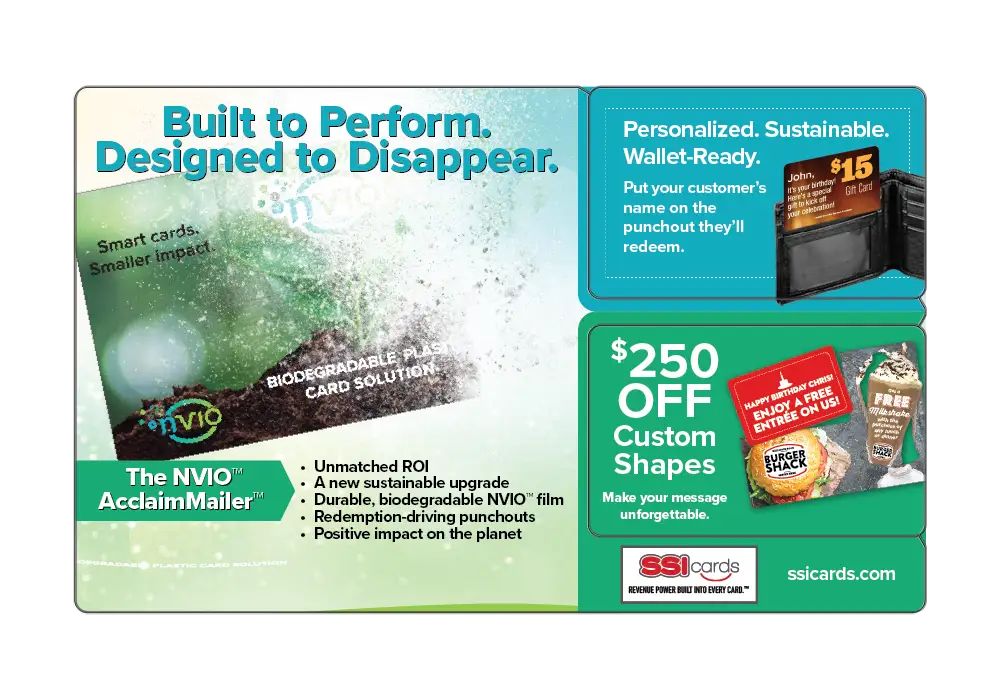
That said, not all mail formats perform equally. High-retention laminated postcard formats, such as the AcclaimMailer™, are designed to mimic the look and feel of a 30 mil plastic gift card and feature wallet-friendly break-off offers. Similar retention benefits are achieved with eco-friendly NVIO™ biodegradable plastic postcards or AcclaimLite™ paper formats. Regardless of the material, wallet-friendly break-off cards naturally extend an offer’s life beyond the initial mailbox interaction. These break-offs are also easily customizable into memorable shapes, such as a race car or a logo, to further boost retention and redemption rates. Businesses using break-off formats see strong results, including a regional grocer with a sustained 25% average redemption rate over five years on loyalty retention mailings and a national car wash chain that reached 450% ROI average across 40 locations with a single acquisition mailing. Consistent campaigns then build on that foundation by increasing familiarity and brand recall.
The Rule of Repetition: How Many Touches It Actually Takes
A long-standing guideline in marketing, often called the rule of seven, suggests that prospects typically need to encounter a message multiple times before they feel ready to respond. While the exact number is a guideline, not a scientific rule, the core principle holds up in direct mail practice. Experience from multi-touch direct mail campaigns shows that many responses occur after additional contacts rather than the initial mailing alone. Each additional touch gives the recipient another chance to notice the offer and move from awareness toward action. Spacing these contacts appropriately builds familiarity through direct mail repetition.
USPS Informed Delivery can supply an early digital preview layer that increases overall engagement for minimal added cost. USPS reports that Informed Delivery adds digital previews and interactive content before the physical mailpiece arrives, allowing “companies to make an impression three times over,” creating another avenue to engage recipients.
What Repeated Exposure Does for Brand Recall
Repeat mailings strengthen direct mail brand recall, helping businesses stay top of mind when customers are ready to buy. Each mailing reinforces the business name and offer, making the brand easier to remember when a need arises. Physical mail adds an advantage because many pieces continue working long after delivery. Recipients interact with them multiple times over days or weeks as they sit on counters or are kept in wallets. It is worth noting that research conducted by the U.S. Postal Service and Temple University found that “physical advertisements were more effective in leaving a lasting impression than their digital counterparts, regardless of consumer age.”
What Changes When You Mail Consistently
Moving from occasional one-time mailings to a steady cadence produces compounding effects. Industry experience shows response rates often improve across a sequence of touches as recipients become familiar with the sender. Customers acquired through repeated contact tend to show higher loyalty and help build a stronger house list. Cost per acquisition typically declines because earlier mailings warm the audience for later ones.
A Realistic Cadence for Local Businesses
For most local businesses, spacing mailings three to five weeks apart offers a workable direct mail cadence that keeps the brand visible without overwhelming mailboxes or budgets.
- Recommended spacing: Mail every 3–5 weeks as a starting point for most local businesses.
- Start small and measure: Begin with a short series of three mailings, track response, then scale.
- Adjust by purchase cycle: Shorter intervals for frequent-purchase businesses; longer intervals for high-consideration services.
- Use tracking: Beyond in-store CRM redemption tracking, add QR codes or PURLs to monitor conversions to refine timing and offers.
| Audience | Recommended approach |
| House list | Mail every 4–8 weeks; fewer touches needed; focus on loyalty offers and reactivation. |
| Prospect list | Mail every 3–5 weeks; start with 3–6 touches; prioritize clear introductory offers and brand recognition. |
Direct mail frequency should match the audience. Prospect lists reach potential customers who have not previously purchased from the business and generally require more touches to build initial awareness. House lists consist of existing or past customers and often produce solid results with fewer repeat mailings because recognition and familiarity already exist. Consistency should also match customer expectations. A restaurant may benefit from frequent offers, while a roofing company or financial service provider may need fewer but more strategically timed touches. Starting with a short sequence of three mailings, tracking results, and adjusting provides the clearest data before scaling.
Consistency Beyond Frequency: Message and Branding
Frequency by itself does not guarantee results. The visual style, tone of voice, and core offer should remain coherent from one mailing to the next so that the brand registers instantly. When design elements and value propositions repeat in a recognizable pattern, each new piece functions as a reminder of previous contacts rather than a fresh message the recipient must decode from scratch. Consistent branding accelerates recognition and strengthens the association between the business and the benefit it provides.
Building a Simple, Repeatable Direct Mail Schedule
The first step is choosing a target cadence based on audience type and business goals, then budgeting for the full series rather than isolated drops. This helps prevent the common pattern of enthusiastic one-time efforts followed by long gaps. A simple direct mail drip campaign can be built by planning a short series of touches spaced several weeks apart.
Automation and subscription-style programs can remove much of the recurring coordination burden. For businesses seeking a steady stream of new customers without managing large one-time campaigns or staffing demands, AcclaimFlex™ provides a pay-as-you-go subscription program that makes maintaining a consistent direct mail cadence practical and affordable. Adding simple tracking tools such as QR codes or personalized URLs makes performance easier to measure and refine.
When a One-Time Mailing Still Makes Sense
Certain situations legitimately call for a single focused mailing. Grand openings, strictly time-limited events, or highly seasonal promotions can benefit from the urgency a one-time drop creates. Even in these cases, the strongest outcomes usually occur when that mailing serves as one intentional touch within a broader ongoing plan rather than standing completely alone. One-time efforts deliver the most value when they complement an established presence instead of attempting to carry the entire relationship on their own.
Key Takeaways
A single direct mail piece can generate short-term interest, but consistency builds the trust, recall, and dependable response that support reliable growth. Shifting from sporadic mailings to a planned cadence produces compounding gains in familiarity and conversion efficiency. The most practical next step is to map out a realistic mailing schedule and select formats that maximize retention. For a complete framework on targeting, creative, and integration, see our complete guide to direct mail marketing for local businesses.
Frequently Asked Questions
Why does a single direct mail piece usually generate fewer responses than a series of mailings?
A single mailing may have less opportunity to build familiarity than a multi-touch campaign, but results depend heavily on the format, offer, audience, and execution. A well-designed, high-retention mailing can outperform multiple traditional paper postcards, while multi-touch campaigns provide additional opportunities to reinforce recognition, test messaging, and improve results.
How many times should a business mail the same prospect before expecting results?
Many responses occur after additional contacts rather than the first mailing alone. A practical starting cadence spaces mailings three to five weeks apart. Cold prospect lists typically need more repetitions, while house lists often respond with fewer contacts.
What is the rule of seven in marketing, and how does it relate to direct mail?
The rule of seven is a long-standing guideline that prospects often need multiple exposures before they act. It is not a rigid law, but it supports using a sequence of touches spaced over weeks rather than expecting strong results from a single mailing.
How often should a small local business send direct mail?
Three to five weeks between mailings works well for most local businesses. The ideal interval depends on the audience and the purchase cycle. Start with a planned series of three mailings, measure results, and refine from there.
Does mailing frequency differ between a house list and a prospect list?
Yes. House lists generally produce higher response rates because recognition and trust already exist. Prospect lists typically need more touches to build familiarity.
Is there ever a good reason to send only one direct mail piece?
Yes. A single mailing can be highly effective when the format, offer, audience, and timing are well matched. One-time mailings also make sense for grand openings, limited-time events, or seasonal promotions. Even when a single mailing performs well, an ongoing campaign can build on that success by reinforcing brand recognition and creating additional opportunities to engage customers.
How should a business budget for consistent direct mail instead of one-time drops?
Budget for the full series rather than individual drops. Subscription-style programs such as AcclaimFlex™ allow a steady flow of mailings on a pay-as-you-go basis without large upfront commitments.
What is a direct mail drip campaign?
A direct mail drip campaign is a planned series of mailings delivered at scheduled intervals instead of one standalone campaign. It helps businesses maintain consistent visibility, test messaging, and build stronger relationships with prospects and customers over time.
High-retention formats such as the AcclaimMailer™ give local businesses practical tools to turn consistent mailings into sustained visibility and stronger results. When you’re ready to move from one-time mailing experiments to a reliable cadence, Request a Quote to see how consistent mailings can lower your cost per acquisition.
By Sean Goade
Executive VP | SSI Cards Marketing & Direct Mail
About the Author
Sean Goade is Executive VP of SSI Cards Marketing & Direct Mail. He specializes in helping businesses leverage high-impact direct mail strategies, gift cards, and loyalty solutions to drive customer engagement, retention, and growth.