
Key Points
- Data quality impacts direct mail performance more than list size alone.
- High data quality improves targeting, deliverability, response rates, and ROI.
- Smaller, well-segmented lists often outperform larger lists with poor data quality.
- Accurate data quality supports personalization, customer trust, and stronger engagement.
- Six key dimensions of data quality (accuracy, completeness, consistency, timeliness, validity, and uniqueness) work together for most effective campaign performance.
- A variety of direct mail formats perform best when paired with reliable data and relevant offers.
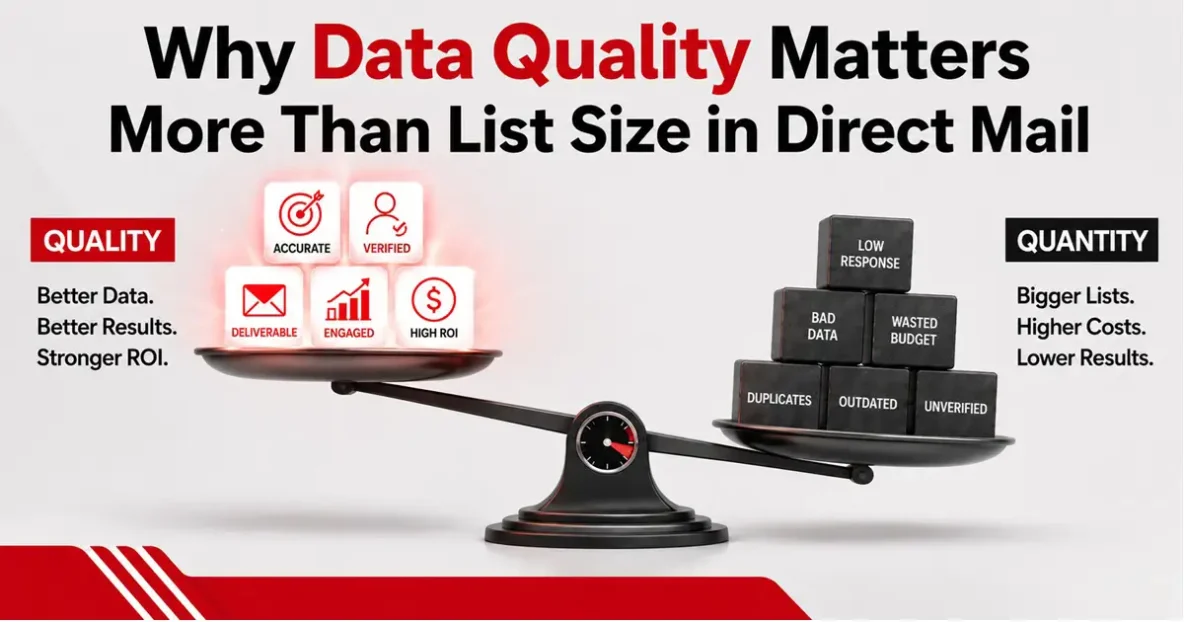
National brands frequently rely on enormous mailing lists to drive scale, yet local businesses often generate stronger results by emphasizing data quality over raw volume. In direct mail marketing, precise, current, and relevant recipient information consistently produces higher response rates and greater ROI than sending offers to large numbers of unqualified prospects.
Data quality ensures your message reaches the right households with timely, meaningful offers. Weak data wastes resources and reduces impact, while reliable data transforms each direct mail piece into a focused communication that captures attention and inspires action. This principle is especially critical in today’s marketing environment, where every dollar spent must deliver measurable returns.
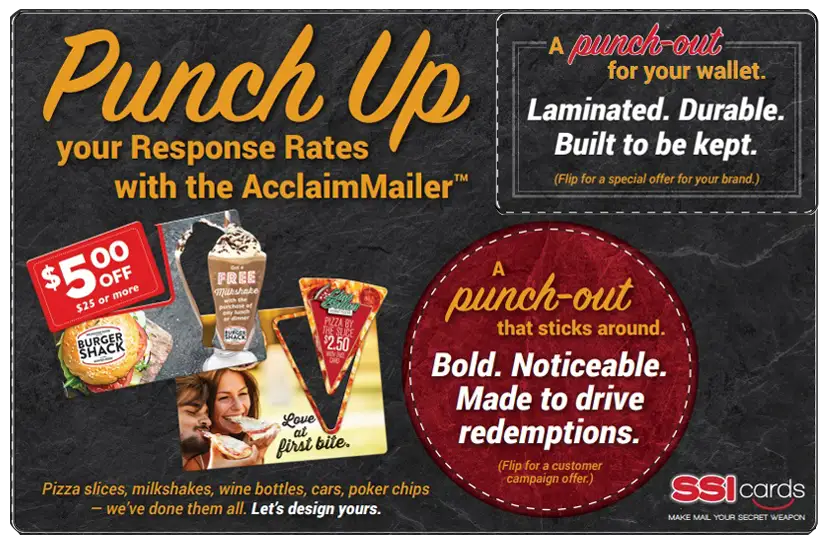
This advantage stands out clearly with premium formats such as the AcclaimMailer™, featuring laminated postcards with durable, wallet-sized pop-out cards that resemble gift cards. These pieces arrive looking sharp and professional, often getting opened first, while the gift-card-style pop-outs encourage long-term retention in wallets.
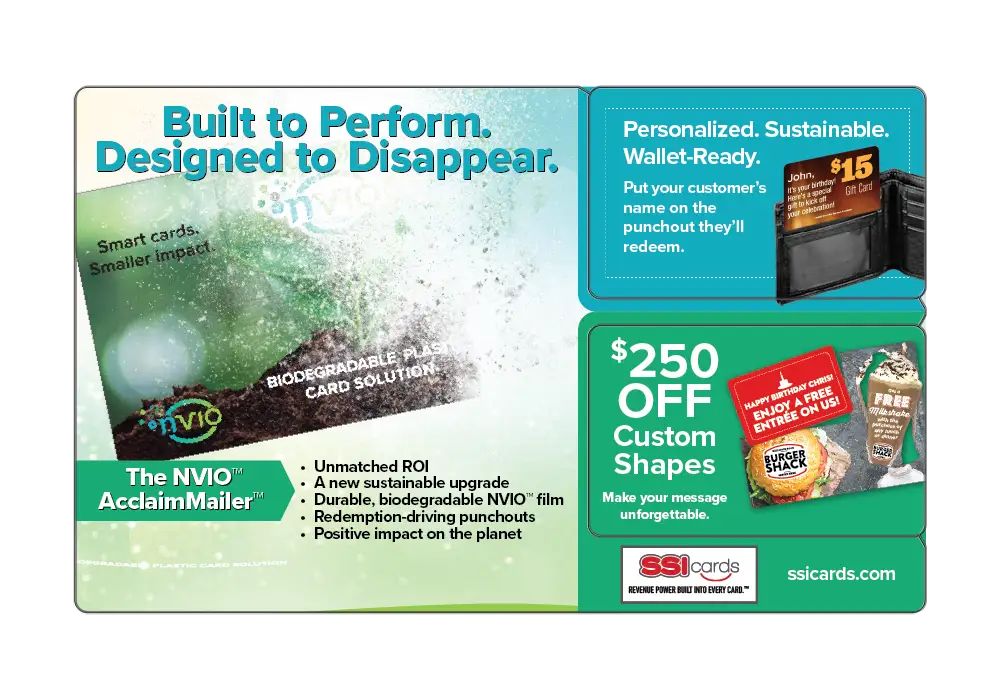
Environmentally focused businesses can choose NVIO™ biodegradable postcards, while those preferring plastic-free solutions benefit from AcclaimLite™ pop-out postcards. Traditional gloss or matte paper postcards remain available for more basic, budget-conscious needs. These pop-out formats can also feature affordable custom die-cuts and shapes with a one-time fee of less than $1,000, helping them stand out in mailboxes and wallets.
Why Bigger Mailing Lists Do Not Always Deliver Better Results
Many businesses assume larger mailing lists automatically produce better results. However, list size without strong data quality often creates inefficiency through high undeliverable rates, irrelevant offers, and damaged brand perception. Larger lists frequently include households outside the ideal target audience, which increases waste and lowers campaign efficiency.
Well-maintained, segmented lists reach the most promising nearby households and existing customers. This targeted approach frequently outperforms larger but less refined mailings, even with fewer total postcards sent. The same principle applies to format: postcard design and quality often matter more than size alone for redemptions and ROI.
What Data Quality Means in Direct Mail Marketing
Data quality encompasses six key dimensions: accuracy, completeness, consistency, timeliness, validity, and uniqueness. Clean addresses reduce wasted postage, while rich details such as demographics, purchase history, behavioral data, and preferences support smarter segmentation and more effective messaging.
In direct mail efforts, reliable data helps create communications that feel thoughtfully prepared rather than mass-produced. Recipients respond better when offers align with their actual needs, location, and relationship with the business.
This foundation allows all six dimensions to work together for superior campaign outcomes. Clean data also strengthens digital reinforcement tools such as QR codes and USPS Informed Delivery, creating multiple touchpoints that improve both delivery and measurement.
How Poor Data Impacts Campaign Performance
Inaccurate or stale lists create multiple setbacks for direct mail campaigns. Undeliverable mail wastes production and postage costs with zero return. Mis-targeted offers produce weak response rates, while irrelevant direct mail can harm brand reputation and future engagement.
Poor data quality limits even the strongest creative and format choices. Even the most effective direct mail pieces will lose potential when sent to the wrong audience. Targeted distribution, however, maximizes visibility and the long-term value. Targeted mailing lists consistently generate higher redemption rates and stronger ROI than broader, less refined lists.
Why Accurate Targeting Improves Response Rates
Direct mail campaigns perform best when guided by local insights. Focusing on specific neighborhoods, ZIP codes, and customer segments increases relevance and the likelihood of redemption. Local businesses have a natural advantage here because they understand community patterns, seasonal trends, and customer preferences that national brands often overlook.
Premium formats excel when paired with strong targeting, often producing redemption rates and ROI that would otherwise be difficult to achieve. For example, wallet-friendly pop-outs from AcclaimMailer™ and AcclaimLite™ stay in daily use when the offer fits the recipient’s lifestyle. NVIO™ adds an eco-friendly benefit that appeals to conscious consumers without losing the effectiveness of a durable wallet coupon. Having an offer easily stowed in a wallet, like a mini gift card, increases the ease of impulse redemptions days, weeks, or even months after delivery.
The Hidden Costs of Low-Quality Mailing Lists
Low data quality carries substantial hidden expenses. Lost postage on bad addresses, printing costs for ignored pieces, and missed sales opportunities quickly accumulate. Many businesses overspend chasing volume with low-quality lists instead of investing in cleaner data and higher-performing direct mail pieces.
Beyond direct costs, poor data also leads to lower customer lifetime value, reduced brand trust, and inefficient marketing efforts that fail to move the needle on revenue.
How Clean Data Reduces Wasted Marketing Spend
Strong data quality lowers overall customer acquisition costs by raising deliverability and response rates. More effective campaigns spread design, printing, and postage expenses across better outcomes. This efficiency enables local businesses to compete successfully against national brands with deeper pockets.
Reliable data also supports steady direct mail efforts instead of sporadic large blasts, promoting sustainable growth without straining operations. Regular list hygiene, including National Change of Address processing and address verification, keeps marketing efforts efficient and cost-effective.
Why Relevance Matters More Than Reach
Today’s consumers face constant marketing messages. Direct mail stands out by offering a physical, tactile experience that digital channels often fail to deliver. But the message still needs to feel relevant to earn attention.
When accurate data drives personalized and timely offers, recipients recognize the message as intentional rather than generic. That recognition increases retention of pop-out cards and drives foot traffic for weeks or even months.
The Role of Segmentation in Direct Mail Success
Segmentation turns a basic address list into a powerful marketing tool. Grouping recipients by location, purchase behavior, or life stage enables highly relevant messaging that outperforms generic promotions.
Accurate data makes initiatives such as direct mail birthday offers far more effective and appreciated by local businesses. Proper segmentation also allows for better A/B testing and continuous campaign optimization.
How Personalization Depends on Accurate Customer Data
Meaningful personalization in direct mail postcards relies on solid underlying data. Correct information allows variable printing to deliver names, custom offers, and relevant details that feel authentic.
This level of relevance builds trust and loyalty, converting recipients into regular customers and advocates. Without clean data, even the best-designed personalization efforts can fall flat or appear insincere.
Proven Performance That Data Quality Enables
Premium formats consistently outperform traditional paper postcards across industries where redemptions mean profit. Campaigns using the AcclaimMailer™ format have delivered outstanding results when paired with accurate targeting and strong data quality:
- A regional grocer achieved a 25% average redemption rate over 5 years by targeting loyalty members, including downward-trending shoppers and lapsed customers.
Case Study: Regional Grocer Achieves 25% Average Redemption Rate Over 5 Years
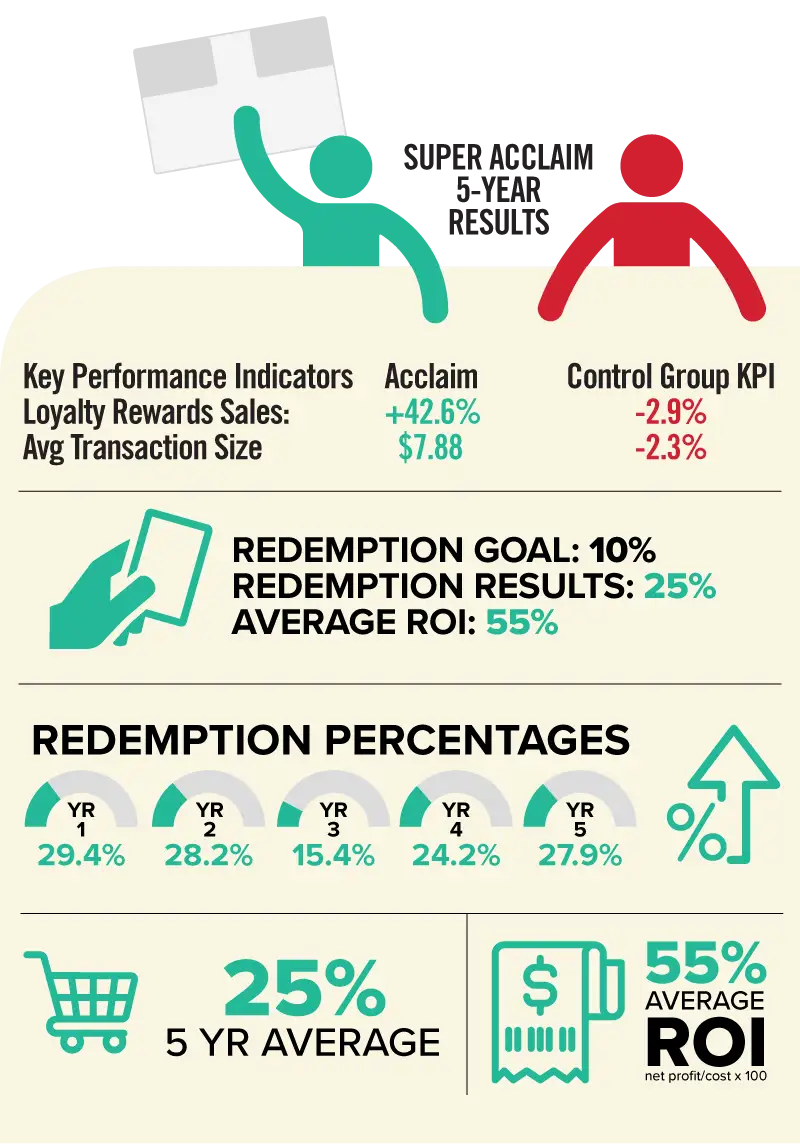
A regional grocer achieved a 25% average redemption rate over 5 years using quality data and targeted AcclaimMailer™ campaigns. The program exceeded its 10% goal while delivering strong ROI and long-term engagement.
- A national car wash chain generated 450% ROI across 40 locations in just 4 months using precisely targeted new customer lists, later increasing to more than 700% ROI within 10 months.
- A restaurant and bar group saw 32.7% redemption on their first campaign and 45% on the following campaign.
- A Texas Mexican restaurant chain recorded 18% redemption with over 600% ROI.
Additional strong results include consistent 8-12% yearly redemption for a men’s clothing retailer, along with double-digit redemption rates for multiple restaurant and retail clients.
These outcomes demonstrate the power of combining premium, high-retention formats with clean, well-targeted data instead of relying on large, unrefined mailing lists. More case studies and details are available on our AcclaimMailer™ page.
Why Smaller, Targeted Lists Often Outperform Larger Ones
Focused campaigns with quality data deliver superior metrics. Well-targeted pop-out direct mail pieces achieve strong redemption rates and ROI that far surpass typical results from generic postcards on the same lists, much less on larger and less refined ones. More case studies and details are available on our AcclaimMailer™ page.
How Data Quality Impacts Customer Trust and Engagement
Responsible, accurate use of customer data shows respect for recipients. Relevant direct mail builds positive feelings and higher engagement, with recipients more likely to retain and act on high-quality pieces that speak directly to their situation.
Measuring the ROI of Better Data Practices
Success can be tracked through deliverability rates, redemption rates, response rates, customer acquisition cost, repeat visits, and overall ROI. Incorporating digital functions such as unique codes, QR codes, personalized URLs, and USPS Informed Delivery makes measurement straightforward and often produces the strongest results when used together.
Building Stronger Campaigns with Smarter Data Strategy
Data quality serves as the foundation for effective direct mail marketing. By investing in accurate targeting, regular list maintenance, and smart segmentation, local businesses can develop campaigns that deliver stronger results and build lasting customer relationships.
High-quality data becomes even more powerful when paired with flexible, high-retention formats. For example, subscription-style programs enable consistent outreach without large upfront commitments, while the Acclaim10™ delivers up to ten unique wallet-friendly pop-out offers in one laminated self-mailer. This format serves as a strong alternative to traditional coupon packs.
Data quality truly matters more than list size. When paired with high-retention formats and relevant messaging, it enables local businesses to achieve outstanding direct mail performance and steady growth that national brands often find difficult to replicate. Prioritize reliable data, and your marketing efforts will become significantly more effective and efficient.
Qualifying new AcclaimMailer™ orders will include free premium Teslin gift cards or loyalty key tags. Visit our promotions page for details.
Ready to improve your results? Request a Quote today to explore targeted direct mail solutions built for performance and profitability.
 By Sean Goade
Executive VP | SSI Cards Marketing & Direct Mail
About the Author
Sean Goade is Executive VP of SSI Cards Marketing & Direct Mail. He specializes in helping businesses leverage high-impact direct mail strategies, gift cards, and loyalty solutions to drive customer engagement, retention, and growth.