
Key Points
- Presorted mail reduces postage costs by preparing and sorting before USPS handling.
- Automation-compatible mail improves deliverability and reduces waste.
- Bulk mail campaigns benefit most when mailing 200 or more pieces.
- Address hygiene and list optimization directly impact ROI and campaign performance.
- Letter-rate eligibility maximizes savings for both standard and larger postcard formats.
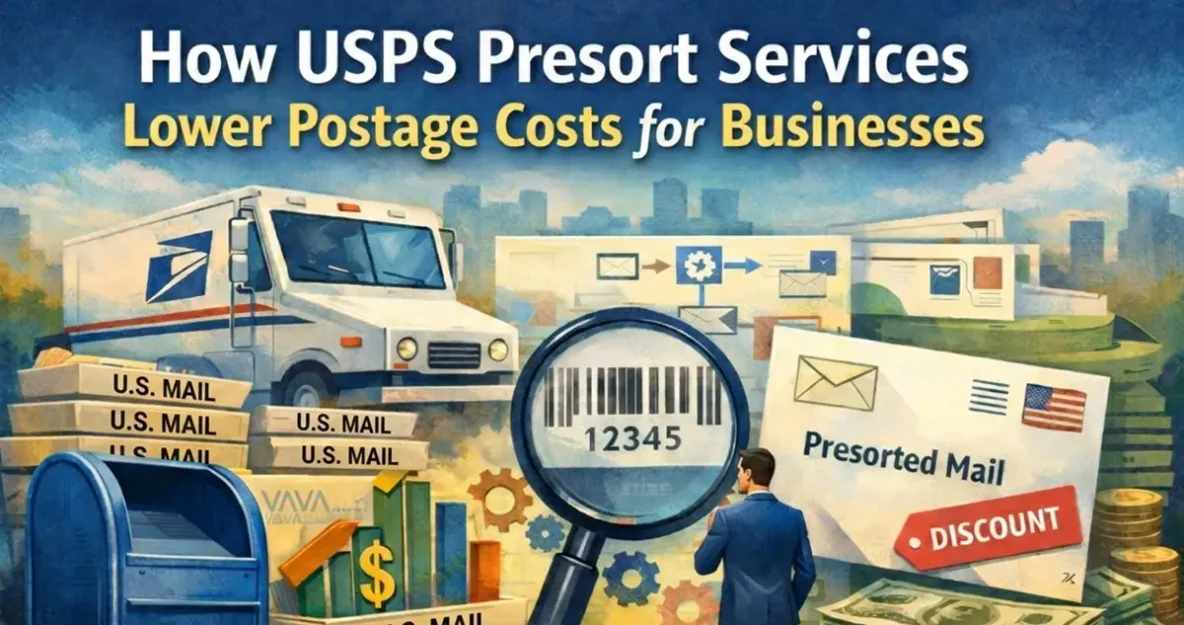
Postage is often the largest expense in a direct mail campaign. Businesses investing in direct mail marketing need to control postage costs while maintaining deliverability and response rates. USPS presort services let companies reduce mailing expenses by preparing and sorting mail before it enters the postal system. When done correctly, presorted mail qualifies for automation discounts, improves delivery accuracy, reduces waste, and strengthens direct mail performance.
SSI processes millions of presorted mailpieces annually, helping businesses lower postage costs while maintaining USPS compliance. Understanding USPS presort mail at an industry level enables organizations to make informed mailing decisions that optimize ROI.
Mailpiece construction also impacts automation compatibility and postage efficiency. Durable materials such as NVIO™ biodegradable plastic and paper-based AcclaimLite™ formats are engineered to maintain barcode clarity, structural integrity, and letter-rate compliance, supporting consistent delivery and measurable return on investment.
What Is USPS Presort Mail?
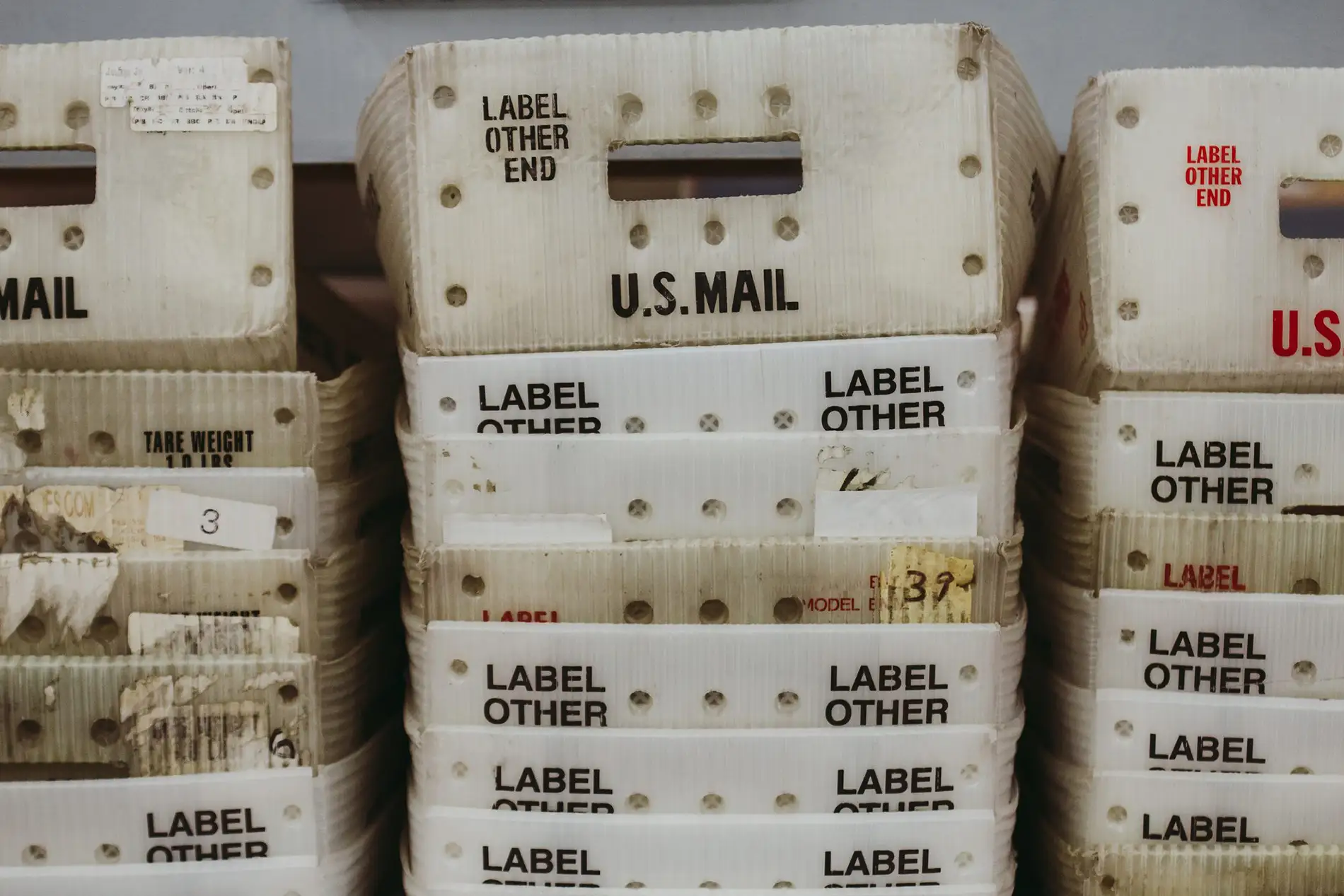 USPS presort mail is grouped and sorted by ZIP Code before submission to the United States Postal Service. Instead of USPS handling all sorting operations, businesses or certified presort providers perform part of the work upfront. This operational efficiency earns postage discounts.
Presorted mail can apply to both First-Class Mail and USPS Marketing Mail. The main requirement is meeting minimum volume thresholds and preparing mail according to USPS automation and formatting standards. For presorted letter-rate pricing, a minimum of 200 pieces is required.
Contrary to common belief, presorted mail is not automatically junk mail. Many business communications including billing statements, loyalty mailers, and direct mail postcards use USPS presort to balance efficiency and deliverability.
How USPS Presort Qualifies for Postage Discounts
To qualify for USPS presort services pricing, mail must meet specific criteria:
- Minimum of 200 pieces for presort First-Class Mail at letter rate
- Proper ZIP Code sorting
- Barcode application and automation compatibility
- Address validation and standardization
- Compliance with USPS requirements
The more detailed the sort, the greater the postage discount. Sorting to 5-digit ZIP levels typically yields the deepest savings. Presort mailing services reduce USPS labor and processing, and that efficiency is rewarded through lower postage costs, especially for bulk mail campaigns.
Letter-Rate Strategy: Why Mailpiece Classification Matters
 Not all mailpieces are priced the same. USPS separates mail into categories such as postcards, letters, and flats, and each classification carries different postage rates and automation standards. Understanding these distinctions is critical when using USPS presort services to lower postage costs.
Letter-rate mail offers a strategic advantage for many businesses. While smaller 4 x 6 pieces often qualify for postcard rate when they meet USPS thickness and automation requirements, larger formats can be engineered to remain within letter-rate specifications rather than moving into the more expensive flat category. Staying within letter dimensions while meeting thickness and automation standards allows businesses to access presorted First-Class Mail or USPS Marketing Mail discounts without incurring flat-rate postage.
For high-volume direct mail marketing campaigns, this classification strategy directly impacts ROI. Postage is typically the largest expense in a campaign. If a larger-format mailpiece can qualify for letter rate instead of flat rate, businesses maintain predictable per-piece postage while gaining more design space and stronger visual presence.
When combined with the 200-piece presort threshold, proper mailpiece design ensures eligibility for automation discounts and deeper ZIP Code sorting levels. The result is lower postage costs, improved mail processing efficiency, and stronger measurable direct mail performance across billing communications, marketing campaigns, and recurring customer outreach.
How Presort Mail Is Processed and Sorted
Presorted mail follows a structured workflow:
- Address validation and correction
- NCOA processing to update recipient moves
- CASS certification to ensure address accuracy
- ZIP Code sorting and tray preparation
- Intelligent Mail barcode application
- USPS documentation and induction
Each step supports automation compatibility and ensures mail qualifies for available presort discounts across eligible First-Class Mail and USPS Marketing Mail categories.
Automation, Barcoding, and USPS Compliance Requirements
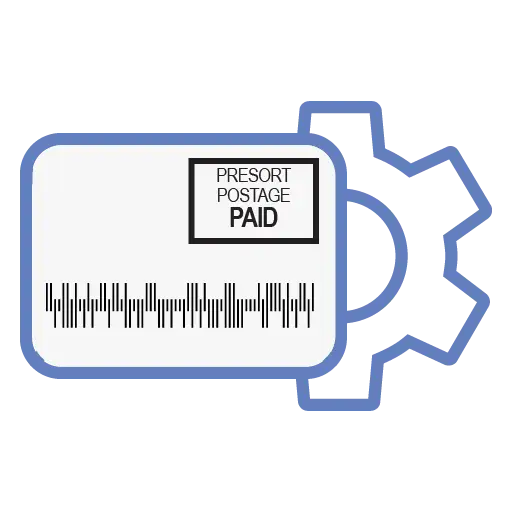 Automation discounts require strict compliance.
- CASS Certification verifies that addresses are valid and formatted to USPS standards.
- NCOA processing can update records for recipients who have moved, using change‑of‑address data going back up to 48 months, depending on the service level used.
- Intelligent Mail Barcodes allow tracking and efficient routing.
Without these steps, mail can be downgraded or rejected. Proper compliance improves deliverability, reduces waste, and strengthens direct mail campaign performance.
How Businesses Save Money with Bulk Mailing
 Bulk mail campaigns achieve the most cost savings using presort services. When mailing high volumes of direct mailpieces, presorted mail reduces postage per piece compared to single-piece First-Class Mail. Because postage is typically the largest cost component, even modest per-piece savings add up quickly.
Key advantages include:
- Lower postage per piece
- Reduced Undeliverable Mail
- Improved targeting to the right target audience
- Stronger measurable direct mail performance
The Role of Address Hygiene and List Optimization
Clean mailing lists directly impact both cost and results. Presort services include CASS certification, NCOA updates, duplicate suppression, and list standardization. Reducing undeliverable mail cuts wasted print materials and postage, while accurate lists improve direct mail campaign performance and help businesses better measure direct mail efforts.
Presort vs First-Class Mail: Cost Comparison

| Feature | First-Class Mail Single Piece | Presorted First-Class Mail |
| Minimum Volume | 1 Piece | 200 Pieces |
| Speed | 1 to 5 Days | 1 to 5 Days |
| Postage Cost | Highest | Discounted |
| Forwarding | Included | Included |
| Preparation | None | Sorting and Barcoding Required |
Traditional postcard sizes like 4 x 6 typically qualify for USPS postcard rate when they meet automation standards. Larger formats, including the AcclaimMailer™, are engineered to qualify for USPS letter rate rather than flat rate. By staying within letter-rate specifications, the AcclaimMailer™ keeps postage predictable and comparable to postcard mailings, maximizing ROI even at larger sizes.
When Should a Business Use USPS Presort Services?
Presort mail is ideal for businesses:
- Mailing 200 or more pieces
- Targeting a defined geographic area
- Running recurring direct mail marketing campaigns
Small businesses can access presort rates by working with certified providers and combining mailings with other clients to achieve volume thresholds.
In-House vs. Outsourced Presort: Which Is More Cost-Effective?
Managing presort internally requires certified software, staff training, and compliance oversight. Most organizations save time and money by outsourcing. Providers like SSI manage all steps, ensuring proper barcoding, compliance, and optimized mailing while freeing businesses to focus on creative direct mail efforts.
How a Presort Partner Helps Reduce Mail Waste
Improperly prepared mail increases returns and wasted postage. A certified presort partner ensures address validation, automation compatibility, and tray sorting. This reduces errors, improves ROI, and strengthens measurable direct mail performance.
Calculating ROI: How Much Can Businesses Really Save?
 ROI is driven by:
- Lower per-piece postage
- Improved delivery to the right target audience
- Higher campaign response rates and conversion
- Reduced waste and operational efficiency
Selecting a direct mail postcard format that maintains letter-rate eligibility ensures postage remains predictable while boosting engagement and overall profitability.
Get Started with a Certified USPS Presort Provider
 USPS presort mail is more than ZIP Code sorting. Compliance, automation compatibility, and format strategy all influence savings. SSI processes millions of presorted mailpieces annually, helping businesses control postage costs, reduce waste, and improve direct mail performance. Aligning postcard size, address hygiene, and USPS presort requirements turns mail operations into a high-ROI growth tool.
Frequently Asked Questions
 What is USPS presort mail and how does it work?
Mail sorted by ZIP Code before USPS delivery. Automation-compliant mail receives postage discounts.
What is the minimum volume required for USPS presort discounts?
200 pieces minimum for letter-rate eligibility.
Is presorted mail cheaper than First-Class Mail?
Yes. At 200 or more pieces, presorted letter-rate mail typically reduces per-piece postage compared to single-piece First-Class Mail.
What qualifies mail for USPS presort pricing?
Mail must meet volume thresholds, pass CASS certification, complete NCOA processing, include Intelligent Mail barcodes, and comply with automation standards.
Is presort mail always junk mail?
No. Billing statements, loyalty mailers, and targeted direct mail marketing use presorted mail.
Can small businesses use USPS presort services?
Yes. The 200-piece minimum allows localized campaigns to qualify for discounted rates.
How much can businesses save with USPS presort services?
Savings depend on volume and class, but presorted mail reduces postage per piece and improves deliverability, boosting ROI and measurable direct mail performance.
Should businesses outsource presort mailing services?
Outsourcing ensures compliance, automation discounts, and consistent results for campaigns.
By Sean Goade
Executive VP | SSI Cards Marketing & Direct Mail
About the Author
Sean Goade is Executive VP of SSI Cards Marketing & Direct Mail. He specializes in helping businesses leverage high-impact direct mail strategies, gift cards, and loyalty solutions to drive customer engagement, retention, and growth.