
Key Points
- AI is transforming direct mail campaigns from broad outreach to precision targeting.
- Predictive analytics improves direct mail performance by identifying high-intent audiences before production begins.
- Smarter segmentation reduces waste, lowers cost per acquisition, and increases ROI.
- Personalization at scale enhances engagement and drives stronger direct mail campaign performance.
- Postcard size and material influence retention, perceived value, and redemption rates.
- Data-driven format selection consistently outperforms volume-based mailing strategies.
- Advanced tracking tools allow brands to measure direct mail performance in real time.
- AI-powered direct mail campaigns integrate digital intent signals with physical marketing execution.
- Compliance, responsible data use, and privacy-conscious targeting strengthen customer trust.
- The future of direct mail marketing lies in automation, predictive modeling, and measurable optimization.
How AI and Data Analytics Are Transforming Direct Mail Campaigns Targeting
Precision now defines winning marketing strategies. Brands that combine intelligent data modeling with high-impact formats are outperforming competitors who still rely on broad geographic lists and generic messaging. That shift explains how ai is changing direct mail from a volume-based tactic into a conversion-focused performance channel.
Modern direct mail no longer depends on static lists. It integrates artificial intelligence, behavioral modeling, predictive analytics, and automated workflows to determine who receives mail, when they receive it, and what format will generate the highest response. The result is stronger direct mail performance, lower waste, and dramatically improved ROI across sophisticated direct mail campaigns.
When targeting becomes smarter, format selection becomes equally strategic. Data determines audience. Format determines impact.
What Smarter Targeting Looks Like Today
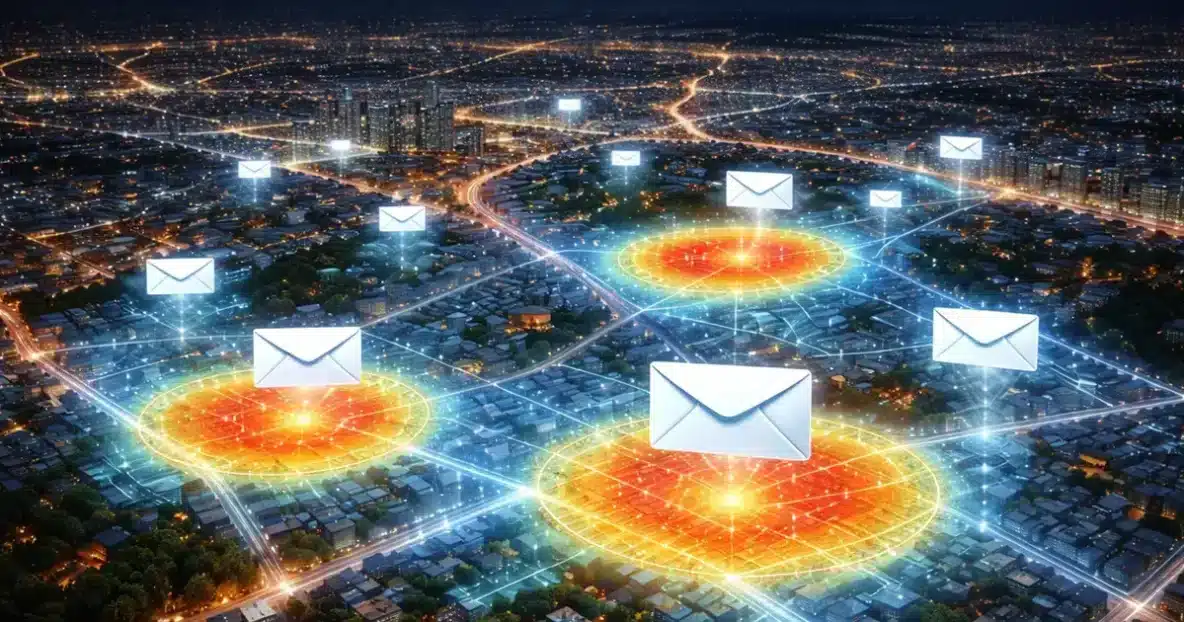
 Traditional direct mail campaigns relied on age ranges, household income, or a ZIP code radius. Today, ai tools evaluate purchasing signals, browsing intent, life events, loyalty data, and churn risk models to identify a refined target audience.
Instead of mailing 20,000 households, brands may identify 7,000 high-intent recipients who are statistically more likely to convert. This evolution is redefining how high-performing direct mail campaigns are structured and executed. This is where format matters.
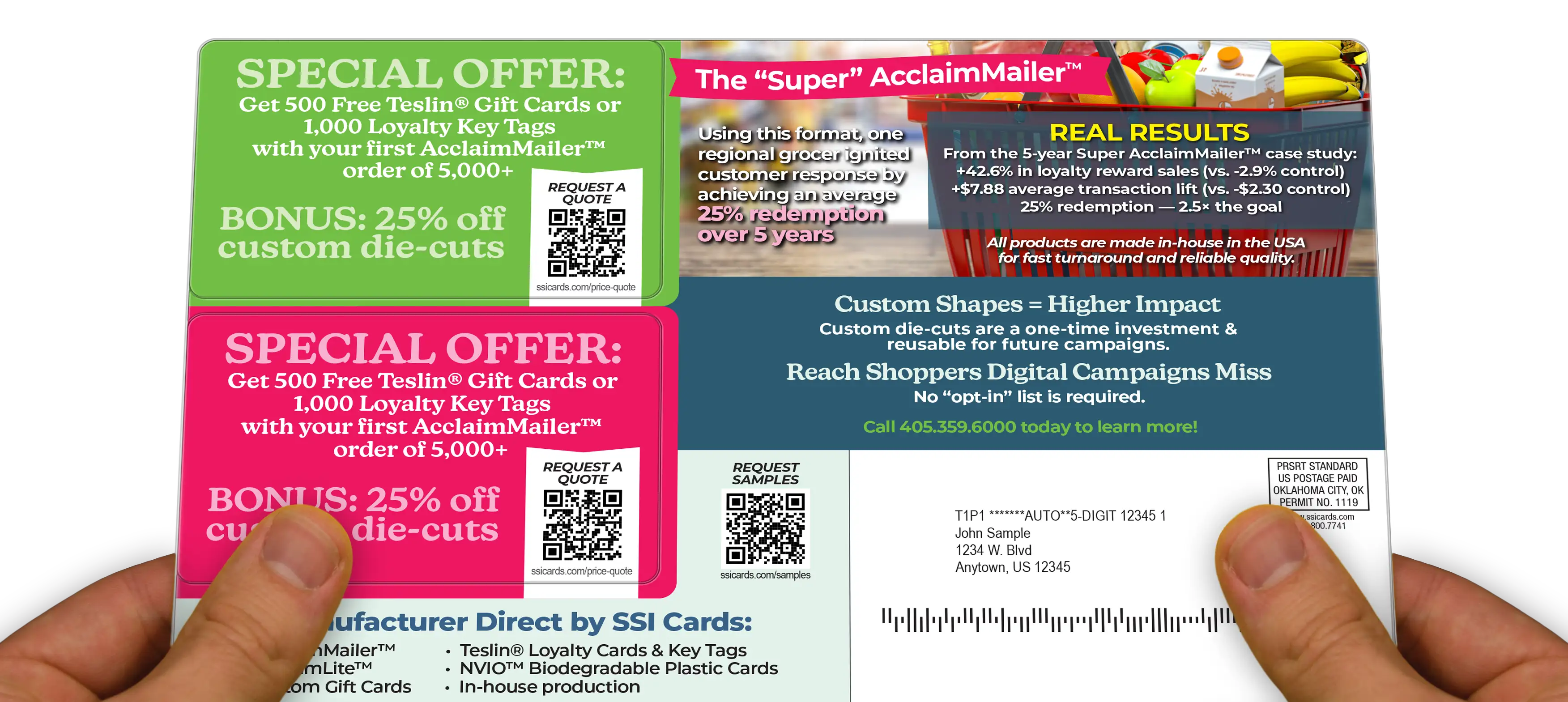
For brands prioritizing redemption and measurable ROI, the AcclaimMailer™ stands apart. This plastic postcard features wallet-sized pop-outs that mirror the feel, thickness, and cosmetic appeal of a gift card. Since postage remains the same regardless of postcard size or material, investing in a durable plastic postcard frequently delivers stronger direct mail campaign performance than increasing volume with thinner paper pieces.
Because SSI manufactures its own plastic postcard formats in-house, brands gain tighter quality control, faster production timelines, and more consistent direct mail performance across campaigns. That vertical integration ensures that data-driven targeting is matched with production precision.
Postcard size directly influences how a recipient perceives an offer. When a substantial postcard size is paired with a keepable card component, it elevates the perceived value of the brand. While a standard oversized paper piece is often discarded as junk, a wallet-friendly plastic postcard is retained for future use. This shift ensures that smarter targeting combined with a premium format consistently outperforms sheer scale without a strategic foundation.
Using Predictive Data to Reach the Right Audience
 Predictive analytics evaluates historical behaviors to forecast future action. In direct mail campaigns, this means identifying:
- Customers most likely to redeem an offer
- Lapsed buyers ready to return
- Loyalty members at churn risk (customers we’re about to lose)
- High-value prospects in-market for an upgrade
Artificial intelligence processes thousands of data signals to refine the target audience before a single piece is printed. Predictive segmentation also informs format choice. If data shows that a segment values sustainability, deploying the NVIO™ biodegradable plastic postcard aligns messaging with values while maintaining durability and wallet-friendly pop-out offers. NVIO™ delivers the same premium feel as traditional plastic postcard formats while meeting strict ASTM D5511-18 standards for biodegradability in plastics.
This alignment between predictive modeling and print materials increases direct mail performance while reducing unnecessary direct mail pieces.
How AI Improves Personalization at Scale
 Personalization now goes far beyond inserting a first name. AI tools and variable data printing allow brands to customize:
- Offer amounts
- Imagery based on browsing history
- Store-specific maps
- Expiration windows
- Messaging tone
- Loyalty balance reminders
These elements transform standard direct mail into individualized communication. Personalization also affects postcard size decisions. A larger postcard size has the real estate to support multiple variable elements, for example.
When you measure direct mail against revenue instead of impressions, quality dominates quantity. Direct mail marketing campaigns that integrate personalization at scale consistently see stronger direct mail campaign performance.
The Role of Customer Data in Direct Mail Campaigns
Data drives every successful direct mail initiative. Sources include:
- First-party purchase data
- Loyalty program behavior
- CRM activity
- Website engagement
- Third-party demographic overlays
- Life event triggers
By synthesizing this information, marketers create actionable segments and optimize direct mail pieces accordingly. Some audiences prefer non-plastic print materials but still value wallet functionality. In those cases, AcclaimLite™ offers a paper-based format with pop-out cards and no plastic. It preserves the wallet-friendly advantage while addressing material preferences.
Selecting between plastic postcard formats and premium paper direct mail postcards becomes a strategic decision driven by analytics, not opinion. The more refined your data, the more efficient your direct mail efforts become, particularly in large-scale direct mail campaigns.
Reducing Waste and Increasing Efficiency with AI Targeting
One of the strongest arguments for AI in direct mail is precision at scale. Poor targeting inflates printing costs, postage spend, and environmental impact, especially when brands rely on blanket approaches such as broad saturation or EDDM-style coverage where offers are delivered to “every door” regardless of purchase intent. A qualified buyer does not exist behind every mailbox. Data-driven targeting ensures volume is strategic, not random.
When you measure direct mail cost per acquisition instead of cost per piece, efficiency becomes the priority metric. Better targeting allows brands to:
- Suppress low-probability and irrelevant households
- Suppress low-probability and irrelevant households
- Upgrade print materials without sacrificing ROI
- Improve postcard size and tactile quality
- Increase redemption rates
A well-targeted plastic postcard campaign mailed at meaningful scale to the right audience routinely generates more revenue than a broad paper campaign sent indiscriminately to a general list. The goal is not fewer pieces. The goal is more qualified pieces. Precision-driven scale improves direct mail performance while protecting marketing budgets and maximizing return.
How Data Analytics Improves Response and Conversion Rates
 Advanced analytics closes the feedback loop. To measure direct mail accurately, campaigns integrate:
- Unique QR codes
- Personalized URLs
- Individual promo codes
- CRM redemption tracking
- POS integration
These tools allow marketers to measure direct mail performance in real time and refine future targeting models. When brands measure direct mail consistently, patterns emerge. Many campaigns demonstrate that a durable plastic postcard with wallet-sized pop-outs produces stronger redemption rates than flat oversized paper pieces.
Physical psychology matters. A thicker postcard size with a detachable card feels valuable. It resembles stored currency. That perceived value increases retention and improves direct mail campaign performance.
Analytics confirms what experience suggests: format influences conversion. When brands measure direct mail response by format, segmentation, and offer structure, its optimization becomes continuous. Brands that consistently measure direct mail by format, offer type, and postcard size uncover patterns that dramatically improve future direct mail marketing decisions.
AI-Driven Direct Mail vs. Traditional Targeting Methods
Traditional direct mail marketing focused on broad reach, sending mail to as many households as possible and analyzing results afterward. AI-driven direct mail prioritizes relevance, using predictive modeling and behavioral data to determine the best audience, timing, and format before a single piece is produced.
It’s not about replacing direct mail, it’s about upgrading it. By using advanced behavioral modeling and real-time data updates, businesses can achieve significantly higher direct mail performance compared to using static lists and minimal personalization.
Privacy, Compliance, and Responsible Data Use
As artificial intelligence becomes embedded in marketing infrastructure, compliance remains critical. Responsible direct mail targeting requires:
- Consent-based data practices
- Secure CRM integration
- Transparent data sourcing
- Compliance with applicable privacy laws (e.g., CCPA)
Direct mail provides a privacy advantage over digital retargeting. A physical mail piece does not track consumers across devices and requires no opt-in to reach them. When responsibly targeted, data-driven direct mail feels curated rather than invasive, building trust and improving campaign performance.
Postcard Size, Material, and Performance
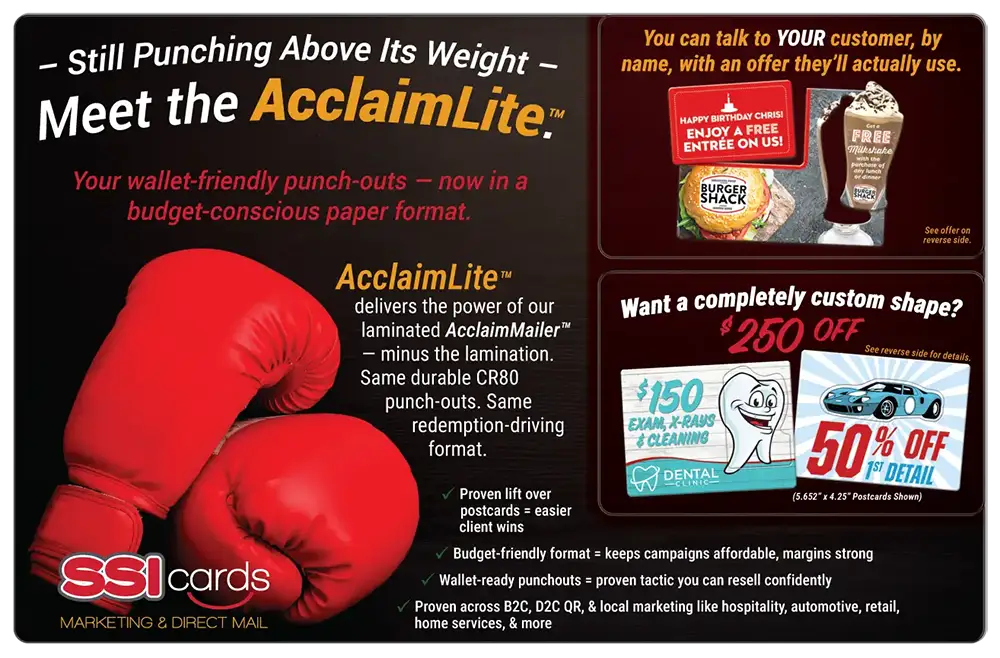 Postcard size influences visibility, handling, and retention, while material affects perceived value. Options include oversized postcards for visibility, standard sizes for familiarity, thick plastic construction for durability, biodegradable plastic alternatives like NVIO™, and premium paper formats such as AcclaimLite™.
Each of these formats can incorporate wallet-friendly pop-outs, ensuring high retention and engagement regardless of size or material. Importantly, postage remains consistent across formats, allowing brands to invest in higher-performing plastic or premium paper postcards without increasing mailing costs. When budgets allow a choice between higher-volume paper mailers or fewer high-impact plastic pieces, the formats with wallet-style pop-outs typically generate stronger conversions, because direct mail performance depends on engagement, not sheer volume.
What Industries Benefit Most from AI-Powered Direct Mail
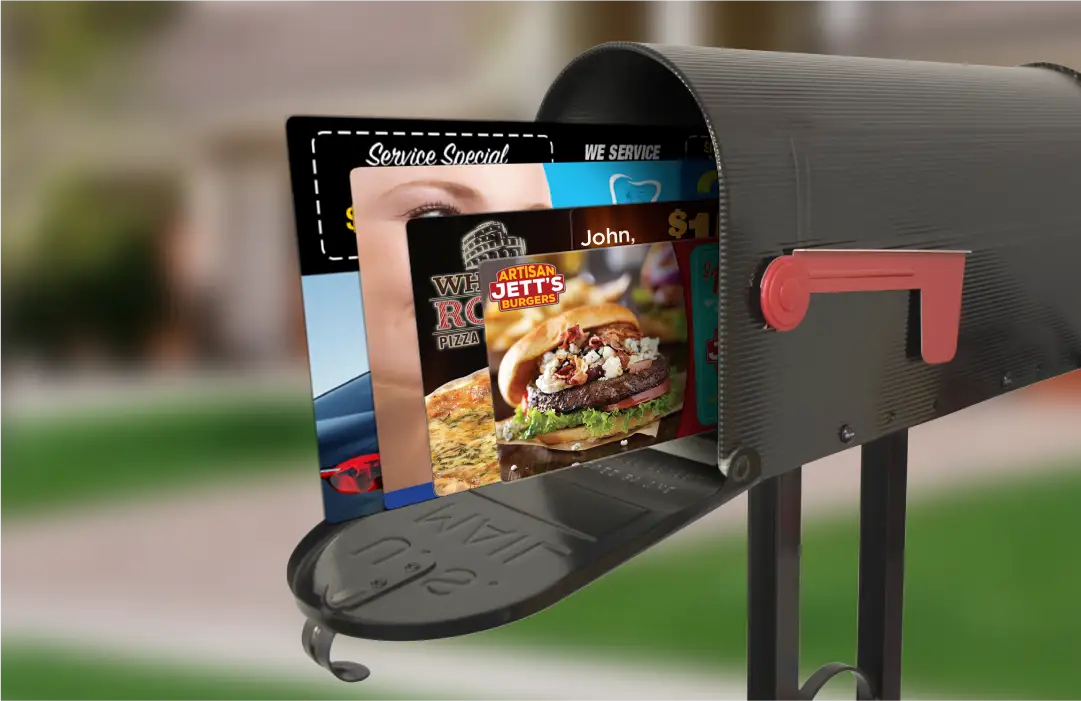 Any industry with repeat purchase potential benefits from precision targeting and premium direct mail postcards. By combining behavioral segmentation with optimized postcard size and durable formats, brands elevate both response and lifetime value. Here are a few examples of industries where AI-driven direct mail delivers measurable impact:
- Restaurants and hospitality
- Automotive service centers
- Luxury retail
- Health and wellness
- Fitness memberships
- Car washes
- Financial services
The Future of Data-Powered Direct Mail
The next phase of direct mail involves automated trigger-based deployment. Imagine this sequence:
- Customer abandons cart.
- AI tools score intent.
- System triggers personalized direct mail.
- Mailer arrives within days.
- Offer includes wallet-sized card with dynamic expiration.
This integration of digital behavior and physical response defines the future of direct mail marketing. As automation expands, marketers will measure direct mail in near real time, constantly refining segmentation. Predictive modeling will determine postcard size, offer value, and format type before print production begins.
AI-driven automation will continue to blur the line between digital intent signals and physical direct mail execution. Direct mail isn’t disappearing, it’s becoming more intelligent.
Conclusion: Maximizing Direct Mail Campaign Performance
Artificial intelligence and data analytics have elevated direct mail from a broad awareness channel to a precision revenue engine. When brands refine their target audience, use predictive segmentation, personalize at scale, and measure direct mail rigorously, they consistently improve direct mail performance in modern direct mail campaigns.
Optimizing postcard size and format is crucial. Direct mail pieces that are durable, wallet-friendly, and data-driven outperform generic print materials every time. For brands focused on measurable growth, combining AI-powered targeting with a high-impact format such as AcclaimMailer™ creates a strategic advantage that standard direct mail postcards cannot match.
Smarter targeting. Better materials. Measurable higher conversions. That is the future of direct mail campaigns.
By Sean Goade
Executive VP | SSI Cards Marketing & Direct Mail
About the Author
Sean Goade is Executive VP of SSI Cards Marketing & Direct Mail. He specializes in helping businesses leverage high-impact direct mail strategies, gift cards, and loyalty solutions to drive customer engagement, retention, and growth.