

Key Points:
- Compare gift cards vs discount coupons to understand how each influences spending and loyalty.
- Gift cards often drive higher average order value and longer term engagement than discounts.
- Discount coupons are effective for short term promotions and quick response.
- Gift card or coupon offers improve direct mail performance when they’re matched to the right postcard size and format.
- Combining both tools strategically can maximize overall campaign results.
Businesses frequently weigh gift cards vs discount coupons when aiming to influence spending, boost retention, and enhance direct mail efforts. Both promotional tools generate revenue and drive traffic, yet they guide customer decisions in fundamentally distinct ways. A discount offer typically creates short term urgency to prompt immediate purchases, while a gift card delivers stored, perceived value that often extends well beyond the initial transaction and encourages ongoing customer engagement. For brands investing in direct mail marketing, understanding this core difference is essential to selecting the approach that delivers stronger, more sustainable behavioral outcomes and better long-term return on investment.
Gift Cards vs Discount Coupons: What Is the Difference?
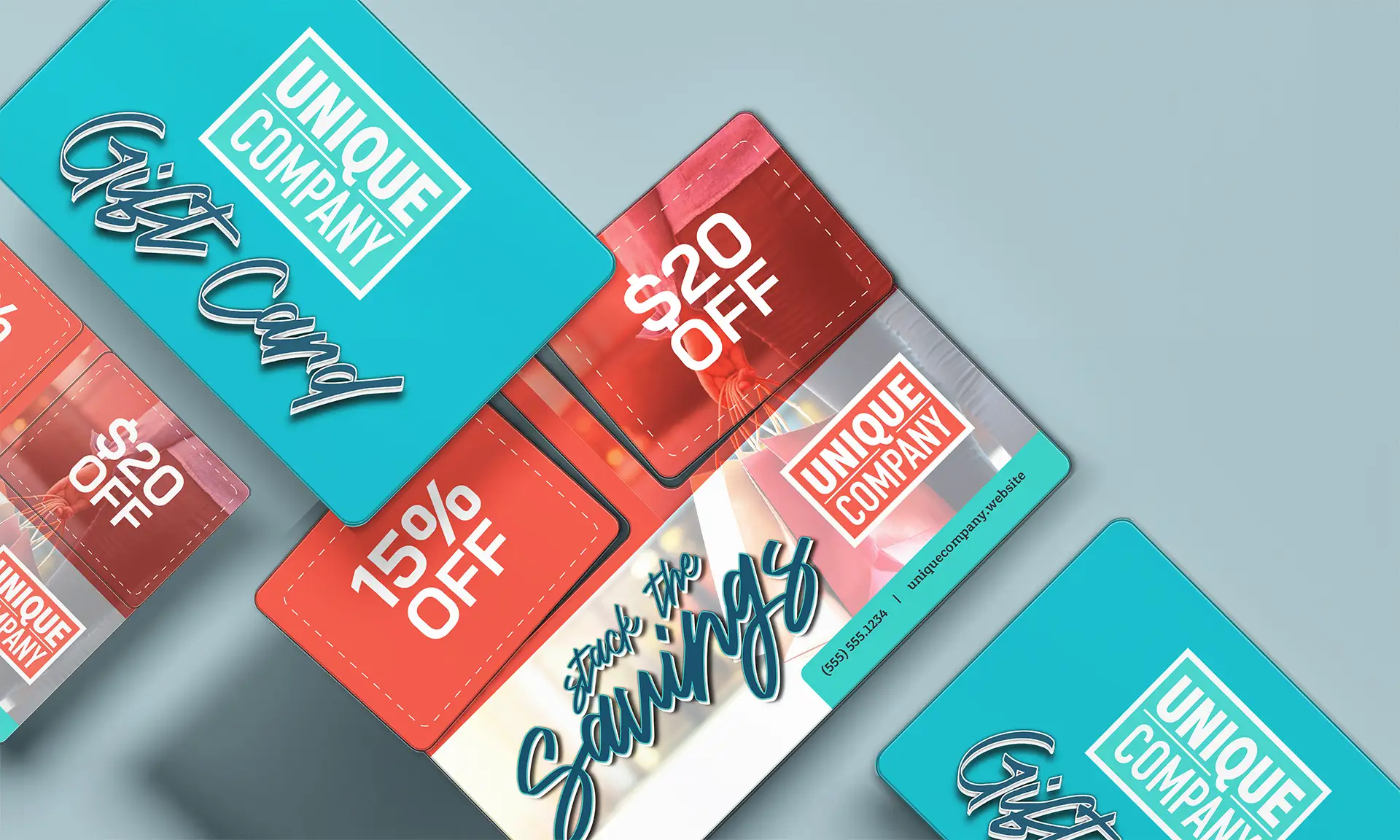 Gift cards in this context include both stored value cards and promotional break-off cards used in direct mail. While behavior differs slightly, stored value cards encourage spending beyond the balance, and breakoff cards function more like temporary coupons. Both types tend to be retained longer than a standard discount coupon, increasing visibility and customer engagement.
A discount coupon almost always relies on a prominent expiration date to create pressure and drive quick redemptions. Once that deadline passes, the incentive effectively disappears, often resulting in lost opportunity if not used. Gift cards, by contrast, are often retained longer because customers perceive them as something worth keeping, whether they carry stored value or function as a promotional breakoff card. That longer retention window often improves response rates. Companies that carefully measure direct mail often find that gift card formats generate a more durable response because recipients treat them as tangible, usable offers rather than disposable paper discounts.
How Gift Cards Influence Customer Spending
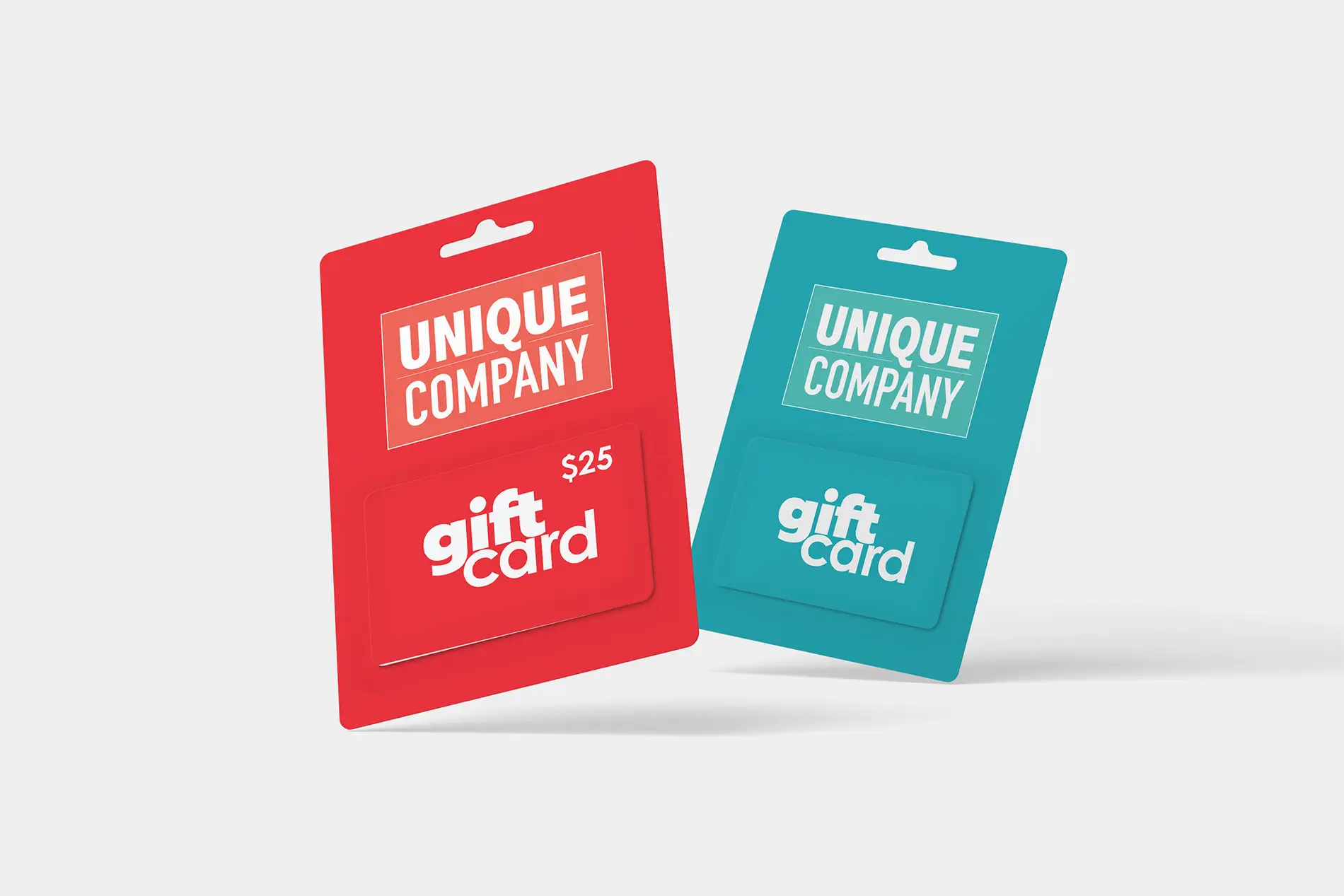 For stored value gift cards, this “house money” effect supports higher average order values and stronger overall return, while promotional breakoff cards primarily drive engagement similar to a coupon. To turn this behavior into action, delivering these offers through direct mail, such as AcclaimMailer™ direct mail postcards that feel like oversized gift cards, amplifies perceived value, keeps the promotion visible longer, and improves direct mail performance compared with standard discount coupon campaigns.
The physical delivery format plays a major role in amplifying this behavior. When customers receive a plastic postcard featuring a pop-out card, the piece immediately feels substantial, premium, and worth keeping rather than discarding. This durability extends visibility in homes or offices, increasing the likelihood of eventual redemption compared to flimsy paper alternatives. Many businesses choose AcclaimMailer™ direct mail postcards specifically for these advantages. The plastic postcard format seamlessly integrates compelling promotional messaging with a high quality, removable card, offering ample space to communicate details while ensuring the offer remains in view for weeks or months.
How Discount Coupons Drive Short Term Sales
 Discount coupons remain one of the most effective tools when the primary goal is rapid, immediate response. Retailers and brands frequently use discount codes to generate quick volume spikes, reactivate lapsed customers, liquidate excess inventory, or capitalize on seasonal demand. These offers perform at their peak when terms are straightforward, the value is clear, and the expiration date is prominently displayed. The ticking clock creates genuine urgency, especially when direct mail pieces are carefully timed to coincide with known promotional periods or events.
That said, over-reliance on discount codes can condition the target audience to postpone purchases in anticipation of future deals. This habit risks eroding full price sales over time. Forward thinking businesses therefore measure direct mail not solely by initial redemption rates but also by analyzing post promotion purchasing patterns to assess true long term impact.
Why Gift Cards Often Increase Average Order Value
 Gift cards naturally support elevated average transaction sizes because customers mentally segregate the stored value from additional spending. Rather than viewing the entire purchase price, they focus only on the incremental amount needed after applying the card, which reduces perceived cost and encourages adding items to the cart.
A well-designed plastic postcard further strengthens this dynamic by increasing perceived offer value right from the point of receipt. Recipients tend to hold onto durable direct mail pieces far longer than standard print materials, keeping the brand and promotion top of mind until they decide to redeem. This extended visibility and response window allows companies to measure direct mail more comprehensively over longer cycles, often producing superior results compared to short-lived, time-bound coupon campaigns.
When Discount Coupons Work Best for Promotions
 Discount coupons deliver exceptional results in scenarios requiring fast inventory turnover, such as limited time flash sales, grand openings, holiday pushes, or clearance events. The combination of clear incentives and discount codes creates powerful urgency that motivates swift action.
The postcard size significantly influences outcomes in these campaigns. Larger postcard size options provide room for eye-catching visuals, hierarchical copy, and prominent calls to action, improving scanability and appeal. Smaller postcard size selections work effectively for concise, high impact messages. Businesses that systematically test postcard size variations across multiple direct mail marketing campaigns gain valuable insights into which dimensions maximize response from direct mail pieces without needing to alter the underlying offer.
Customer Psychology Behind Gift Cards vs Coupons
 From a psychological standpoint, gift cards carry meaningful emotional weight. They feel like a genuine reward, a thoughtful gesture, or a form of brand-provided spending power. A discount coupon, while practical, is usually perceived as a purely transactional price reduction. This emotional versus rational divide significantly impacts customer engagement. Gift cards foster connection, reciprocity, and positive brand association, while discount codes primarily trigger urgency and rarely build lasting affinity.
Material and tactile choices reinforce these perceptions. A premium plastic postcard signals quality and thoughtfulness, whereas lightweight paper can feel disposable. Businesses that use NVIO™ biodegradable plastic gift cards combine durability with environmental responsibility, available with or without an NVIO™ magnetic stripe depending on program needs. Thoughtful print materials and overall presentation shape first impressions long before the offer is redeemed, increasing the likelihood that recipients will retain and engage with the promotion.
Which Option Builds Stronger Customer Loyalty?
 Gift cards typically cultivate superior long term loyalty because customers often store them in wallets, drawers, cars, or phones until ready to use, maintaining prolonged brand exposure. Pairing them with a plastic postcard extends that passive visibility even further.
Discount codes, by comparison, usually disappear quickly after redemption or upon the expiration date. Durable direct mail pieces, particularly those optimized for postcard size and easy retention, generate more reliable follow up responses across multiple months, as tracked through redemption and repeat visit data.
How Gift Cards Reduce Discount Dependency
Frequent deployment of discount codes can gradually weaken a brand’s pricing power, as customers learn to delay purchases waiting for the next promotion. Gift cards avoid this dependency trap entirely. They incentivize spending and increase transaction size while fully preserving standard pricing integrity.
For campaigns where budget or sustainability is a priority, AcclaimLite™ paper pop-out postcards offer a compelling alternative. This format delivers gift oriented promotions effectively without plastic components when maximum durability isn’t essential. Using a specific postcard size for AcclaimLite™ mailers allows for a professional look that still encourages the recipient to engage with the brand.
When Businesses Should Use Both Gift Cards and Coupons
Many sophisticated brands achieve optimal direct mail campaign performance by strategically combining both tools rather than choosing one exclusively. For example, high value or loyal customer segments might receive a premium plastic postcard enclosing a gift card, while broader prospect lists receive targeted discount codes. This tiered approach aligns promotional value precisely with the expected response profile of each target audience.
Testing different postcard size formats further supports refinement: larger sizes for upscale, detailed gift offers and smaller sizes for straightforward, urgent discount distribution. Layered, segmented direct mail efforts keep direct mail marketing cost-efficient, flexible, and highly effective across diverse customer groups.
Choosing the Right Promotion Strategy for Your Business
 Ultimately, the optimal choice depends on the primary business objective. If the focus is on generating immediate volume and quick wins, discount codes often deliver the fastest results. If the priority is building stronger loyalty and increasing lifetime value, gift cards typically create more durable customer behavior.
To make informed decisions, businesses should measure direct mail rigorously: track redemption timing, average spend per transaction, and segmented retention rates by target audience. Aligning postcard size, promotional offer type, and print materials with campaign goals makes direct mail marketing more predictable. Testing multiple postcard size options can also reveal which durable direct mail pieces resonate most with each target audience, improving overall direct mail performance.
A plastic postcard further boosts retention because customers are far less likely to discard a substantial, high quality piece. This durability advantage alone can meaningfully elevate direct mail campaign performance compared with disposable paper alternatives. The most successful campaigns thoughtfully pair the right promotional instrument with the ideal postcard size and format for the intended audience and strategic priorities.
By Sean Goade
Executive VP | SSI Cards Marketing & Direct Mail
About the Author
Sean Goade is Executive VP of SSI Cards Marketing & Direct Mail. He specializes in helping businesses leverage high-impact direct mail strategies, gift cards, and loyalty solutions to drive customer engagement, retention, and growth.