
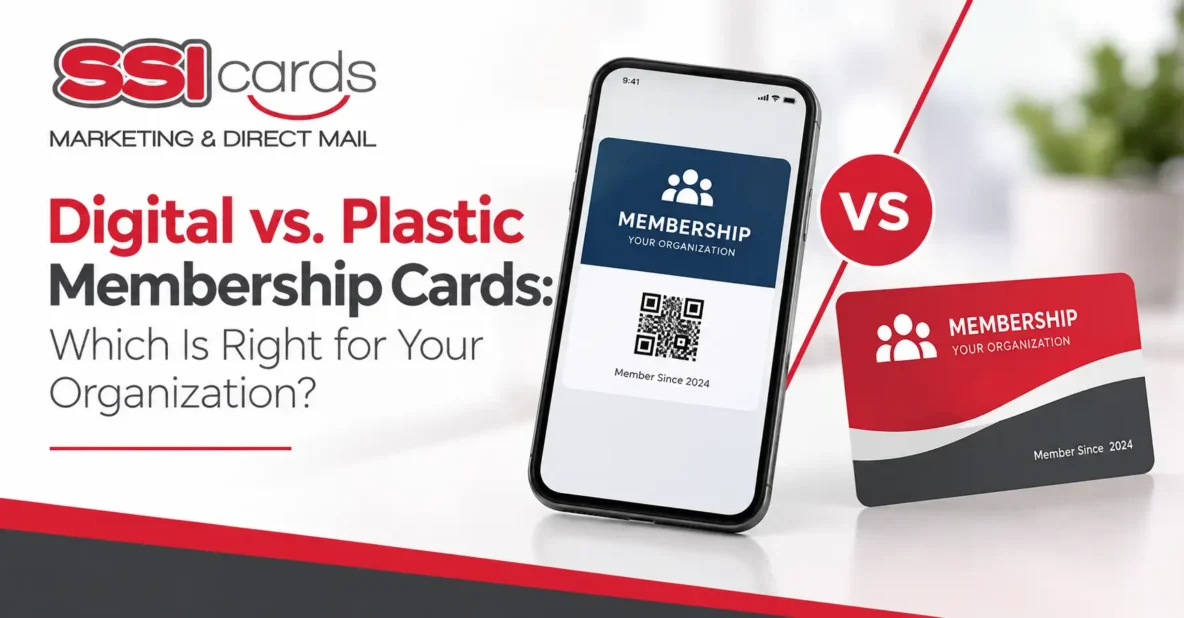
Digital membership cards store membership information on a smartphone, but they require the right technology, member data, distribution process, and ongoing support. Physical membership cards provide a durable credential that works without a phone or signal and gives members a simple, tangible representation of their membership.
For many U.S. membership organizations, a physical card remains a practical choice because it is easy to carry, easy to show when needed, and does not require an app, download, charged phone, or digital-wallet setup.
A digital wallet pass can be a useful addition for members who prefer mobile access. For organizations serving members with different preferences, a hybrid program that combines a physical card with a digital option can provide broader coverage.
The format decision is about more than issuing a credential. It affects accessibility, check-in reliability, member experience, and how an organization welcomes and communicates with its members. This guide explains how digital and physical cards work, where each format makes sense, and how the two can work together.
Key Points
- Digital membership cards store membership information on a smartphone and can be useful for organizations that want to offer a mobile credential.
- Physical membership cards work without a smartphone, battery, app, or data connection, making them practical for reliable access and broad member accessibility.
- Custom membership cards and membership key tags can include member names, numbers, barcodes, QR codes, photos, expiration dates, and other program-specific features.
- Physical cards are often the practical primary credential for established associations, libraries, clubs, healthcare plans, gyms, museums, schools, and other member-based organizations.
- Digital wallet passes can complement a physical membership card for members who prefer mobile access.
- Hybrid membership programs let organizations offer both formats while keeping physical credentials available for members who need or prefer them.
Quick Answer: How to Choose Between Digital and Physical Membership Cards
In practical terms, digital cards provide a phone-based credential for members who prefer mobile access. Physical membership cards are often easier to carry, reference, and present, while also providing accessibility, durability, and reliable use without an app, login, battery charge, or data connection.
What Is a Digital Membership Card?
A digital membership card is a membership credential stored on a smartphone. It may appear in a smartphone wallet, an organization’s mobile app, or another digital pass platform.
Digital cards commonly display:
- Organization name and branding
- Member name or number
- Membership level
- Expiration or renewal date
- Barcode or QR code
- Contact information or other membership details
Digital membership cards can be stored in smartphone wallets or an organization’s mobile app. Members typically receive them through email, text, an app, or an “Add to Wallet” option.
Staff can verify a digital card visually or scan its barcode or QR code at a front desk, entry point, checkout counter, or event registration station.
The main advantage is convenience. Organizations can issue credentials quickly and, depending on the system, update information without producing a replacement card.
The tradeoff is device dependence. Members need a compatible phone and access to the digital pass. Battery life, device compatibility, and member familiarity with digital wallets can also affect the experience. Members may simply prefer not to download another app or manage another digital pass.
What Is a Physical Membership Card?
A physical membership card is a wallet-size credential printed with an organization’s branding and personalized member information. Many membership cards use the ISO/IEC 7810 ID-1 format and are 3.375” by 2.125”, the familiar size used for many identification and payment cards.
A physical membership card may include:
- Organization branding
- Member name, number, or membership level
- Barcode or QR code
- Expiration or renewal date
- Photo for ID-focused programs
- Magnetic stripe or other program-specific features
- Unique serial number
- Break-off key tag for frequent check-in
Physical cards can also be paired with key tags or combination cards for organizations where members regularly check in, such as gyms, clubs, libraries, and other facilities. SSI Cards manufactures custom membership cards, membership key tags, and badges with personalized member information, including membership cards with barcodes, QR codes, magnetic stripes, photos, and other program-specific features.
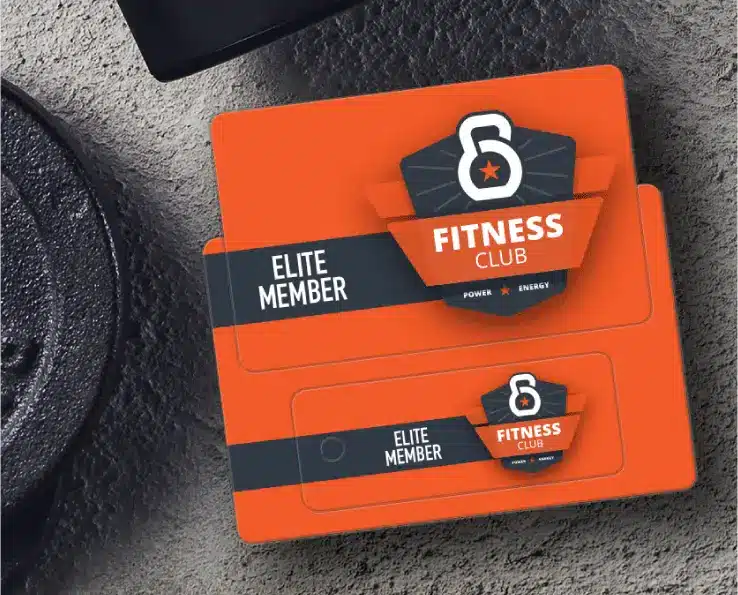
A branded key tag also keeps the organization’s name visible on a member’s everyday key ring, extending the membership card’s brand presence beyond the wallet.
A physical card also has a practical advantage that is easy to overlook: members do not have to remember an app, find a digital pass, charge a phone, or rely on a device at the moment they need to show membership.
Physical Card Materials Matter
Physical cards can use different substrates depending on the application, durability requirements, printing needs, environmental considerations, and cost.
Printed membership cards remain a practical choice when members need a credential that is easy to carry, show, scan, and use without relying on a mobile device.
For applications requiring greater durability and flexibility, laminated Teslin® cards use a Teslin® synthetic substrate with polyester lamination. This PVC-free construction is particularly well-suited to physical membership cards, key tags, and other cards that receive repeated handling.
Organizations seeking a landfill-biodegradable physical-card option can also consider NVIO™ biodegradable plastic membership cards.
The important consideration is choosing the material based on how the card will actually be used.
Membership card printing should be planned around how often the card will be handled, how it will be personalized, whether it includes variable data or variable imaging, a barcode, a QR code, or a key tag, and how it will be delivered to members.
Digital vs. Physical Membership Cards: Key Differences
Cost
Digital: Avoids physical card production and postage, but may require a digital platform, system integration, member-data management, setup, and ongoing support.
Physical: Includes card production and, when applicable, personalization, fulfillment, and mailing. Physical cards can be produced as standalone credentials or as part of a mailed welcome, renewal, or membership package.
Issuing and Updates
Digital: Requires a process for creating, distributing, managing, and supporting the digital credential. Depending on the system, membership information can be updated electronically.
Physical: Requires production and, when mailed, delivery time. Significant printed changes generally require a replacement card, while a barcode or QR code can link members to current online information.
Reliability
Digital: Depends on phone access, battery life, device compatibility, and the member’s ability to access the digital credential.
Physical: Works without a phone, app, battery, account login, or data connection.
Accessibility
Digital: Works best when members are willing and able to use a smartphone, access a digital wallet or app, and retrieve the credential when needed. Some members may prefer to limit app downloads, notifications, tracking, or reliance on a phone for routine interactions.
Physical: Provides a simple, familiar credential that members can carry and use independently of a smartphone, app, account login, battery charge, or data connection.
Member Experience
Digital: Can be convenient for members who already use their phones for tickets, passes, and other credentials.
Physical: Tangible, familiar, and easy to keep in a wallet or on a key ring. Members can reference and present it when needed without opening an app, logging in, or locating a digital pass.
Materials and Environmental Considerations
Digital: Does not require a physical card or mailed card package, but depends on smartphones, software platforms, network access, and supporting digital infrastructure.
Physical: Requires card materials and, when mailed, a delivery package. SSI Cards offers paper and synthetic materials, including PVC-free and biodegradable options for some applications.
The right choice depends on what the credential needs to do, how members use it, and the requirements of the organization.
When Digital Membership Cards Make the Most Sense
Digital membership cards can be a good fit when speed, convenient updates, and mobile access are priorities.
They may work particularly well for:
- Short-term memberships, trials, and events
- Organizations that need to issue credentials quickly
- Programs where member information changes frequently
- Audiences that already use mobile tickets and wallet passes
- Memberships where the credential is primarily used for barcode or QR code entry
- Programs looking to reduce initial printing and mailing requirements
Digital passes can be useful when an organization wants to change information displayed directly on the member’s phone. Physical cards can still identify the member through a barcode, QR code, magnetic stripe, or member number connected to current information in the organization’s system.
Digital-only programs should still consider member support and accessibility. Some members may not own a smartphone, may have difficulty downloading a pass, or may simply prefer a physical membership credential.
When Physical Membership Cards Make Sense
Physical membership cards are often appropriate when the credential needs to be reliable, easy to use, and available to members who do not want to rely on a smartphone.
They can be especially useful for:
- Associations and professional organizations with paid memberships
- Libraries, museums, and community organizations serving broad audiences
- Gyms, clubs, recreation centers, and venues with frequent check-in
- Healthcare plans and credentialed organizations requiring clear identification
- Schools, youth programs, and family memberships
- Organizations serving members with varied levels of technology access
For many established membership programs, the simplicity of a physical card is itself an advantage. It remains visible, familiar, and readily available in a wallet or on a key ring throughout the membership period.
A physical card can create a tangible welcome moment, give members something physical to interact with, and serve as a lasting reminder of membership.
For paid and renewing programs, a well-designed physical credential can also support membership retention by keeping the organization visible and making the membership easier to use.
For frequent check-in, a break-off key tag can provide an additional convenience. Members can keep the full-size card in their wallet and use the smaller tag for quick scanning.
The Hybrid Approach: Using Physical and Digital Cards Together
A hybrid membership program gives members both a physical card and a digital wallet pass. Members can then use whichever format is most convenient.
The connection can be straightforward. The physical card and digital pass can use the same member number, barcode, or QR code, allowing the organization’s systems to recognize the same membership through either credential when configured to do so.
Common approaches include:
- A mailed physical card plus a digital wallet pass
- A membership card with a break-off key tag plus an organization app
- A mailed membership card attached to a personalized letter or card carrier that includes instructions or a QR code for adding a digital pass
- A Card Mailer that combines one or two cards, key tags, or other break-off pieces with personalized messaging in a single sheet designed for envelope mailing
- A physical card for identification and a digital pass for convenient check-in

For programs that mail separately produced cards and personalized letters, matching accuracy is essential. A single-sheet card mailer keeps the card, key tag, and personalized message together through production and mailing. This reduces handoffs and helps reduce the risk of a card being paired with the wrong letter or delivered to the wrong member.
Hybrid programs also allow organizations to add digital access gradually rather than requiring every member to change formats at once.
This can be particularly useful for associations, libraries, healthcare organizations, museums, clubs, and other member-based organizations. For programs that need a complete card-and-mailing solution, SSI Cards provides membership solutions for associations, clubs, and organizations, including card production, personalization, fulfillment, and mailing.
Features to Include on a Hybrid-Ready Physical Card
A physical card can serve as the primary membership credential while also supporting digital access.
Consider including:
- Barcode or QR code that matches the digital credential, including a QR code membership card format when that is the best fit for the organization’s check-in system
- Unique member number
- Member name and, when needed, a photo
- Expiration or renewal date
- Durable material suited to expected handling
- Optional break-off key tag
- Clear organization branding
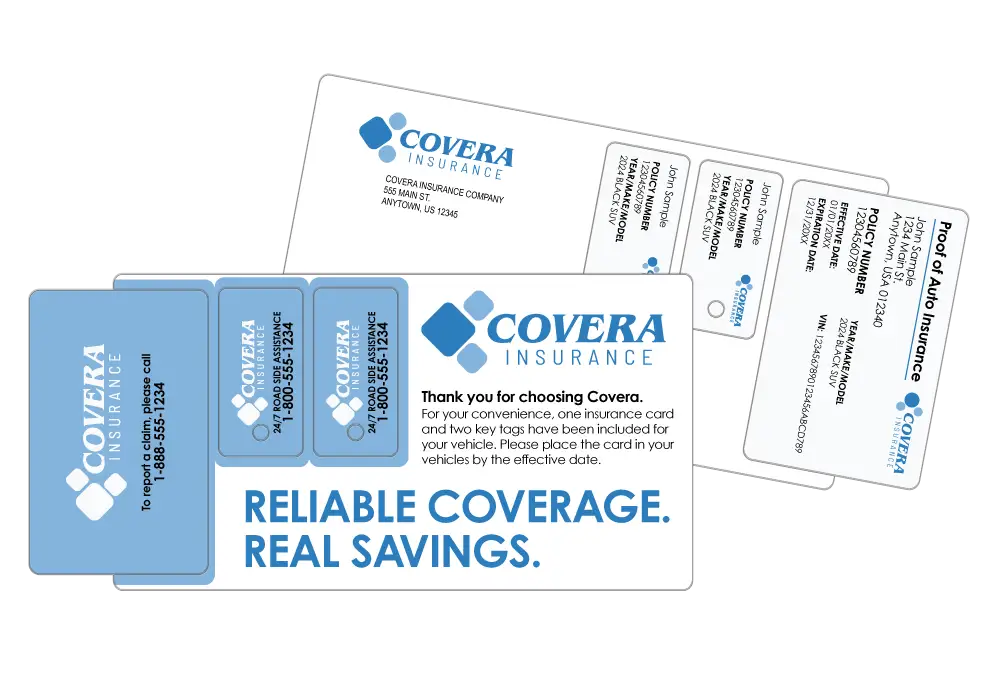
Variable data and variable image printing can personalize cards with member-specific names, numbers, barcodes, photos, expiration dates, membership levels, and other program-specific information.
Get the Right Membership Card Format
Whether you need standalone cards, key tags, a traditional card-and-letter package, or a complete membership card mailing program, SSI Cards can manufacture, personalize, fulfill, and mail the materials through one source.
Request a free quote or request free samples to evaluate card materials and formats before production.
Questions to Ask Before Choosing a Membership Card Format
Before selecting a digital, physical, or hybrid program, ask:
- Do our members reliably carry and use smartphones?
- Does the card need to grant entry, function as a member ID card, track visits, or simply identify membership?
- Is the membership short-term, annual, or recurring?
- How often do member details change?
- What barcode, QR code, or scanning technology do we already use?
- Do members need a physical credential as a backup?
- How important is the physical welcome or renewal experience?
- Do we serve members who may need a non-digital option?
- Are PVC-free or biodegradable materials important to our organization?
The answers can make the choice clearer. A temporary event credential may need only a digital pass. A frequently used member ID card may need a durable physical format. An organization with a diverse membership may benefit from offering both.
Key Takeaways
Digital membership cards provide a phone-based credential for members who prefer mobile access, but they require the right technology, member data, distribution process, and ongoing support. Physical membership cards provide a durable, tangible credential that is easy to carry, reference, and present without an app, login, battery charge, or data connection. They also give members a physical reminder of the organization and a more tangible way to interact with their membership.
Frequently Asked Questions
Are digital membership cards replacing plastic cards?
Digital membership cards can be a useful option for members who prefer phone-based access, but they do not eliminate the need for physical credentials in many programs. Physical membership cards remain practical for members who want a simple credential that works without an app, login, battery charge, or data connection. They also give members a tangible reminder of the organization and a visible token of belonging that can reinforce the value of membership. A hybrid program lets organizations offer a digital option while keeping physical cards available.
Which is cheaper, a digital or a plastic membership card?
The answer depends on the full program, not just the cost of issuing one credential. Digital cards avoid physical production and postage, but may require a platform, technology integration, member-data management, setup, and ongoing support. Physical card costs include production and, when mailed, personalization, fulfillment, and postage. Organizations should compare total implementation, administration, member-support, replacement, and communication costs before choosing a format.
Can a plastic membership card work with a digital wallet pass?
Yes. When the physical card and digital pass use the same member number and barcode or QR code, an organization’s system can be configured to recognize either format. This gives members the flexibility to use the credential that works best for them.
What should a membership card include?
Most membership cards should include organization branding, a member name or number, a barcode or QR code, and an expiration or renewal date. Programs that use the card as identification may also need a photo, membership level, or unique serial number.
How long does a plastic membership card last?
Card life depends on the material, construction, and how frequently it is handled. Durable card materials and appropriate construction can help physical membership cards withstand repeated use over an extended service life.
Are plastic membership cards bad for the environment?
Traditional PVC cards raise environmental considerations, but physical membership cards can be produced using other materials. Organizations can evaluate PVC-free Teslin® or biodegradable NVIO™ options based on their functional and durability requirements, as well as environmental priorities.
What is the standard size of a membership card?
Many membership cards are about 3.375” by 2.125”. This familiar format fits standard wallets and many card readers.
Can one membership card have both a barcode and a QR code?
Yes. A membership card can include both when different systems and member interactions require them. The appropriate configuration depends on the organization’s check-in equipment and how member data is used.
By Sean Goade
Executive VP | SSI Cards Marketing & Direct Mail
About the Author
Sean Goade specializes in helping businesses and membership organizations leverage high-impact direct mail, membership cards, gift cards, loyalty cards and key tags, and personalized marketing solutions to support engagement, retention, and growth.