
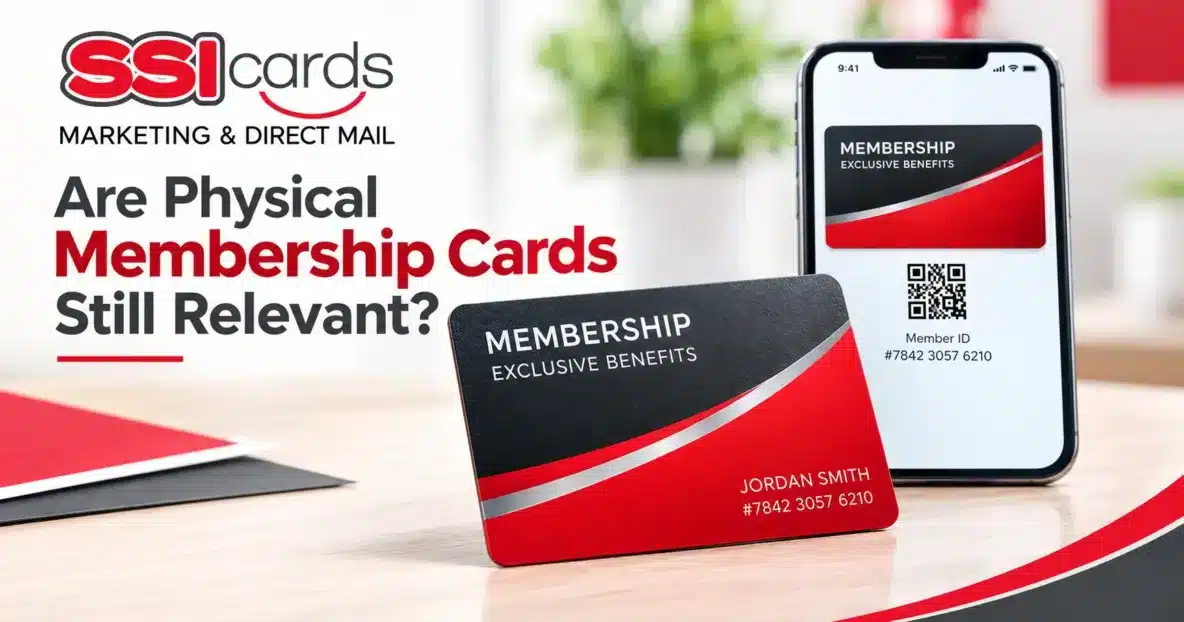
Quick Answer
Yes. Physical membership cards remain useful for organizations that value tangible recognition, convenient identification, reliable access, and a personal welcome. Digital credentials offer speed and convenience, but they depend on a member having access to a compatible device and being comfortable using it.
For many organizations, the best solution is a hybrid approach that gives members a choice between physical and digital credentials.
Key Points
- Physical cards provide tangible membership recognition and convenient in-person identification.
- Digital cards simplify distribution and updates but depend on device and account access.
- A hybrid approach lets members choose the format that works best for them.
- Secure personalization, appropriate materials, and reliable mailing help make physical cards more effective.
Why Membership Leaders Are Rethinking Physical Cards
Digital membership cards can reduce printing and mailing needs while making it easier to distribute credentials and update member information. They also fit naturally into mobile-first experiences.
At the same time, physical cards offer benefits that digital credentials do not always replicate. They give members something tangible to keep, can be presented without opening an app, and may help reinforce a sense of belonging.
The decision is not simply whether physical cards are outdated. It is whether they still serve a practical purpose for an organization’s members and operations.
What Physical Membership Cards Still Do Better Than Digital
Tangible Recognition
A physical membership card can make membership feel official. It gives members something they can carry, display, or keep in a wallet, reinforcing their connection to the organization.
For associations, clubs, alumni groups, museums, and other membership-based organizations, that physical reminder can support a sense of identity and belonging.
Reliable Identification and Access
Physical cards can provide a straightforward way to identify members at events, facilities, check-in desks, and participating locations. They can be presented without a charged phone, an internet connection, or an app.
Depending on the program, a card may include a photo, membership number, barcode, or other identifier. Organizations should choose features that meet their operational needs without exposing unnecessary personal information.
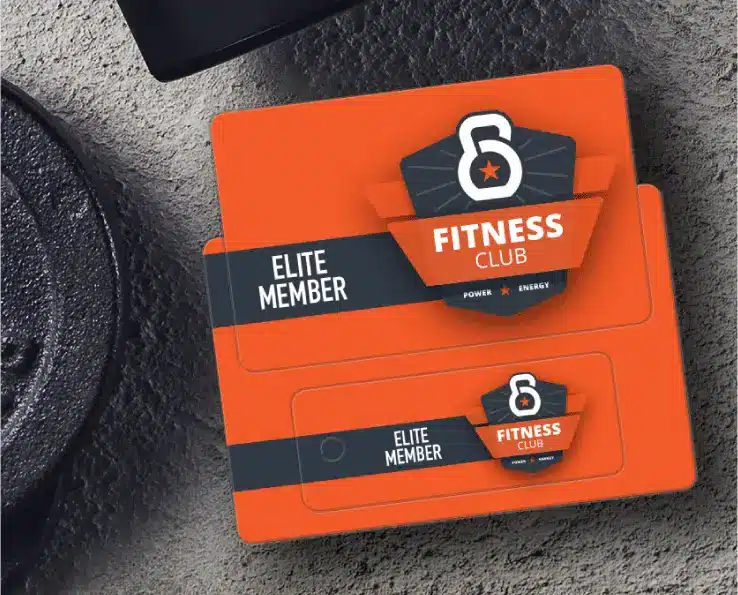
A membership card can provide a convenient way to identify members at check-in, while a matching key tag gives them another option for carrying their credentials. For gyms and other organizations with frequent member visits, having both formats can make membership identification easier.
Accessibility and Choice
Not every member uses digital tools in the same way. Pew Research Center reported that 91% of U.S. adults owned a smartphone in 2025, including 78% of adults ages 65 and older. Smartphone ownership is widespread, but it is not universal.
Offering a physical option can help members who do not own a compatible smartphone, prefer not to rely on one, or simply find a wallet card easier to use.
A More Personal Welcome
A membership card delivered with a welcome letter or useful program information can make enrollment feel more complete. It gives members a tangible reminder that they have joined and provides an opportunity to explain benefits, access procedures, and next steps.
ASAE’s guidance on member onboarding emphasizes timely welcomes, targeted communication, manageable instructions, and communication through members’ preferred channels. A physical welcome package can complement those efforts when it fits the audience and program.
Where Digital Membership Cards Have the Edge
Digital credentials can be convenient for organizations that need to issue cards quickly, update information frequently, or provide access through mobile devices.
Depending on the system, digital cards can be distributed electronically, updated without reprinting, and integrated with membership platforms or digital wallets. They can also reduce the need to produce and mail physical credentials.
However, digital access depends on the technology and the member’s ability and willingness to use it. Organizations should also consider device compatibility, connectivity, privacy, account security, and what happens when a member loses access to a phone or account.
Physical vs. Digital Membership Cards
| Consideration | Physical membership cards | Digital membership cards |
| Member experience | Tangible and familiar | Convenient on a compatible device |
| Access | Can be presented without a phone | Depends on device and system access |
| Distribution | Requires production and delivery | Can often be issued electronically |
| Updates | May require replacement | Can often be updated digitally |
| Recognition | Provides a physical reminder of membership | Can be integrated into a mobile experience |
| Accessibility | Useful for members who prefer physical credentials | Useful for members who are comfortable with digital tools |
| Cost factors | Production, personalization, mailing, and replacement | Platform, integration, support, and maintenance |
The best option depends on the organization’s audience, budget, security requirements, and how members use their credentials.
Which Organizations Benefit Most from Physical Cards?
Physical cards can be particularly useful when members need to show proof of membership or identify themselves in person.
Examples include:
- Associations and professional organizations that issue member credentials or provide member-only benefits.
- Clubs and recreation facilities where members check in or access locations.
- Museums and cultural institutions that offer member admission or benefits.
- Alumni organizations that provide membership recognition and partner benefits.
- Healthcare, benefit, and service programs that require an identification credential, subject to the program’s security and regulatory requirements.
- Organizations serving a wide range of ages where offering both physical and digital options can accommodate different preferences.
Physical cards are less essential when membership is entirely online and members rarely need to prove their status in person. Even then, a physical credential may still have value as a welcome item or membership reminder.
The Case for a Hybrid Membership Card Strategy
Organizations do not necessarily need to choose between physical and digital credentials. A hybrid strategy lets members use the format that best fits their needs.
For example, an organization might issue a digital card immediately after enrollment and mail a physical card as part of the welcome process. Members could then use a phone for convenient digital access while retaining a physical credential for situations where it is preferred.
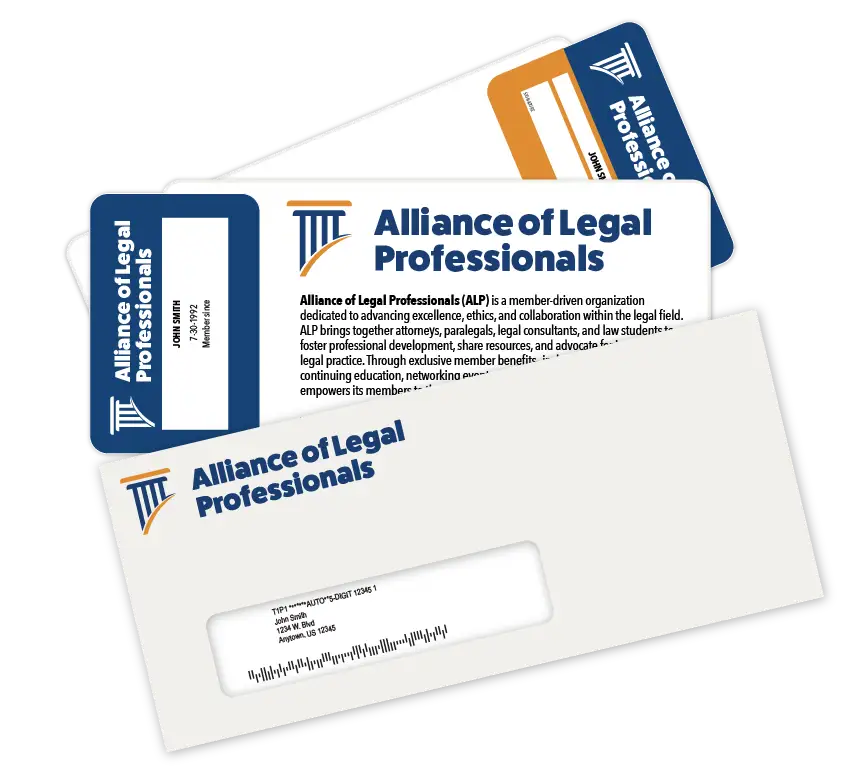
Physical credentials can also be mailed inside a standard envelope with a welcome letter, instructions, or benefit information. With an integrated membership card mailer, the card and printed mailer are produced as one piece and enclosed inside the envelope. The integrated card mailer is inserted into a standard window envelope, with the recipient’s address showing through the window.
An integrated membership card mailer can deliver a new or renewed credential along with relevant membership information in one piece. Combining the card and printed communication helps simplify fulfillment while giving members a physical reminder of their affiliation.
Keep in mind that membership credentials and promotional direct mail serve different purposes. A membership card identifies a member or supports access. Promotional mailers such as AcclaimMailer™ and AcclaimLite™ are designed to promote offers, encourage engagement, or support member retention. They can complement a membership program, but they are not replacements for secure membership credentials.
Planning a physical membership card program? Request a quote to discuss card features, personalization, and mailing options.
What Research Says About Physical Communication
Research from the USPS Office of Inspector General and Temple University examined how physical and digital advertising affect attention and memory. Its findings suggest that physical advertising can prompt strong responses in the brain and may be remembered differently from digital advertising.
The findings support considering tangible communication as a valuable way to capture attention.
How to Decide Whether Physical Cards Are Right for Your Program
Before choosing a credential format, consider these questions:
- Do members need to show identification or proof of membership in person?
- Do physical cards make membership feel more tangible or recognizable?
- Does your audience include people who may prefer not to rely on a smartphone?
- How often does member information change?
- What are the full costs of production, personalization, distribution, replacement, and digital platform support?
- What security and privacy requirements apply to the credential?
- Would a hybrid option give members more flexibility?
The answers can help determine whether physical cards, digital credentials, or both are appropriate.
How to Make Physical Membership Cards Work Harder
Consider how their design, materials, personalization, and delivery can improve the member experience.
Choose Materials for the Intended Use
Select card materials based on durability, appearance, printing requirements, and expected service life.
Teslin® is a synthetic substrate that can be laminated to produce durable, 30 mil, PVC-free cards. SSI Cards also offers NVIO™, a landfill-biodegradable plastic card solution with an optional magnetic stripe.
Include Useful Features
Depending on the program, physical cards may include:
- Member names and identification numbers
- Photos or membership levels
- Barcodes or QR codes
- Magnetic stripes, where needed
- Expiration dates or renewal information
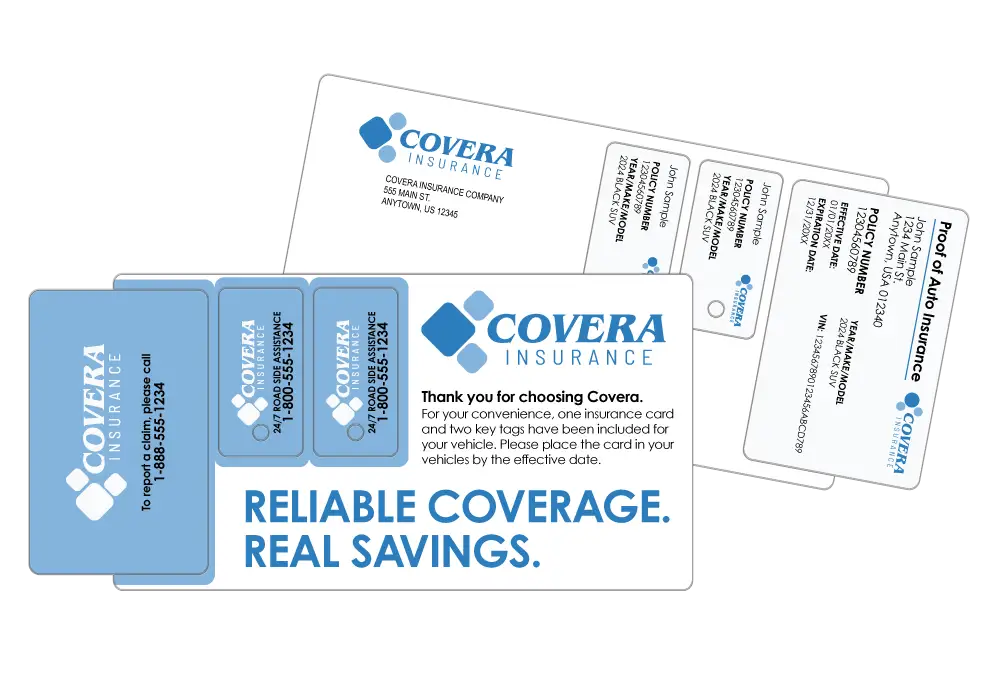
Key tags offer another practical way to keep important information close at hand. Attached to a key ring, they can be easier to carry and access than a card stored in a wallet or filed away at home. Providing two key tags gives members or policyholders the option to keep one with their primary keys and another with a spare set.
Include only the information needed for the card’s purpose. Avoid printing birth dates, full account numbers, or other sensitive details that could create unnecessary privacy or security risks.
Personalize the Member Experience
Personalization can make a card or welcome package more relevant. Names, membership levels, expiration dates, and tailored instructions may help members understand their status and benefits.
Personalization also requires careful data handling. Limit access to member data and production files to authorized personnel, use secure transfer methods, and confirm that data is matched correctly to each recipient. If a QR code or barcode links to a member account, avoid encoding sensitive information directly into it. Use an authenticated destination and have a process for deactivating lost or compromised credentials.
Make Delivery Part of the Welcome
A physical card can be more useful when it arrives with a concise welcome message, instructions for accessing benefits, and clear next steps. An envelope helps protect the credential and keeps supporting information together, while a properly designed window envelope can display the recipient’s mailing information without exposing the enclosed card’s details.
For organizations mailing credentials at scale, an integrated card mailer can simplify production
FAQs
Are physical membership cards still relevant?
Yes. They remain useful when members need tangible identification, in-person access, or a physical reminder of membership.
Are digital membership cards better than physical cards?
Neither format is best for every membership program. Digital cards are convenient to distribute and update, while physical cards provide tangible identification members can carry and present without relying on a smartphone. Offering both gives members flexibility and helps organizations meet different needs.
What information should appear on a membership card?
Include only what is needed for identification, access, or program administration. Names, membership numbers, photos, and barcodes may be appropriate, depending on the use. Avoid unnecessary sensitive information, such as birth dates or full account numbers.
How can organizations mail membership cards securely?
Use an envelope that protects the credential, limit sensitive information on the card and visible mailpiece, and apply secure data-transfer and production controls. Check personalization and matching processes carefully and use authenticated destinations for codes that link to member accounts. Removing the need to match print eliminates the risk of mismatched cards and letters in the field.
What materials are available for membership cards?
Membership cards can be made using different materials depending on the intended use and durability requirements. Options include paper and paper-laminated formats, as well as durable, laminated Teslin® cards, which are PVC-free, and NVIO™, a landfill-biodegradable plastic card solution tested to ASTM D5511-18.
Need Membership Cards for Your Organization?
SSI Cards manufactures custom membership cards, badges, and key tags and provides mailing services to help organizations deliver credentials efficiently. Request a quote to discuss card materials, personalization, and mailing options for your membership program.
By Sean Goade
Executive VP | SSI Cards Marketing & Direct Mail
About the Author
Sean Goade specializes in helping businesses and membership organizations leverage high-impact direct mail, membership cards, gift cards, loyalty cards and key tags, and personalized marketing solutions to support engagement, retention, and growth.