
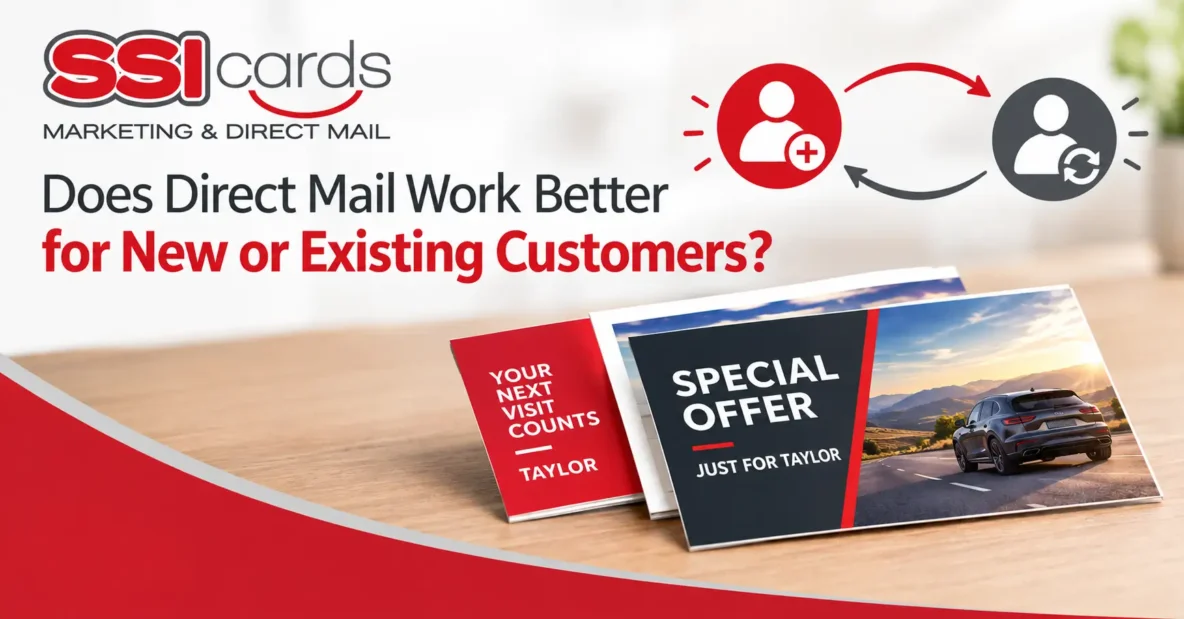
Key Points
- Direct mail can work for both customer acquisition and customer retention.
- Existing customers have the advantage of an established relationship and available customer data.
- New-customer mail can perform well when the audience and offer are carefully targeted.
- Lapsed and declining customers can be valuable retention audiences.
- Lookalike audiences can help businesses find prospects who resemble their best customers.
- Acquisition and retention campaigns should use different offers, tracking, and success measures.
- A hybrid strategy can use loyalty, win-back, new mover, geographic, and lookalike audiences to grow both repeat business and new-customer volume.
The Quick Answer
Direct mail can work well for both new and existing customers. Existing customers often have an advantage because they already know the business and can receive more relevant offers, but new-customer mail can also perform very well when the audience is targeted and the offer gives prospects a clear reason to respond.
The right choice depends on the goal. Acquisition mail is designed to create a first purchase, visit, appointment, or inquiry. Retention mail is designed to generate another purchase, strengthen loyalty, or win back a customer.
Why the Audience Matters
A direct mail campaign can serve two very different purposes.
A house list is a business’s own file of current customers, past customers, loyalty members, leads, or subscribers. A prospect list contains people who fit the target market but have not yet purchased from the business.
Existing customers may be more receptive because they already recognize the sender. The business may also have information that allows it to create more relevant messages.
Prospects require more introduction. They need to understand who the business is, why the offer matters, and why they should act. That makes targeting, offer strength, creative, and follow-up particularly important.
Direct Mail for New Customers
Acquisition mail is designed to encourage a first transaction. It can help a business opening a location, expanding its service area, introducing a service, reaching new movers, or building demand in a selected neighborhood.
The goal should not simply be to mail the largest possible audience. It should be to reach households that are reasonably likely to become customers.
Useful acquisition targeting can include:
- A realistic radius around a location or service area.
- New movers who may be selecting local businesses for the first time.
- Household, income, homeowner, family, or life-stage characteristics that fit the offer.
- Geographic areas with strong potential but limited current customer penetration.
- Lookalike audiences based on a business’s highest-value customers.
A lookalike audience identifies prospects who share characteristics with a business’s strongest customers. It can help concentrate acquisition spending on people who are more likely to fit the business’s customer profile.
A business can also combine acquisition and retention in a hybrid strategy. For example, it could continue mailing current customers while using a lookalike audience to reach new households with similar characteristics.
The offer should give a prospect a simple reason to try the business. A restaurant might use a first-visit incentive. A home-service company might promote an inspection or seasonal service. The mailer should make the next step clear through a QR code, promo code, phone number, website, or other response mechanism.
Direct Mail for Existing Customers
Retention mail targets people who have already interacted with the business. That existing relationship can make the campaign easier to personalize and measure.
USPS identifies customer data, targeted messaging, loyalty incentives, and lapsed-customer outreach as applications for direct mail retention programs.
Retention campaigns can support:
- Loyalty rewards.
- Repeat visits and purchases.
- Seasonal reminders.
- Membership renewals.
- Referral offers.
- Cross-selling.
- Win-back campaigns.
A win-back campaign targets customers who have fallen outside their normal purchase cycle. A restaurant might contact guests who have not visited in several months. A retailer might reach customers whose activity has declined. A service company might mail a reminder when maintenance is likely due.
The offer should match the relationship. Loyal customers may respond to recognition or a reward, while lapsed customers may need a stronger reason to return.
New Customers vs. Existing Customers
| Factor | New Customer Mail | Existing Customer Mail |
| Audience | Prospects, new movers, geographic targets, lookalikes | House list, loyalty members, past and lapsed customers |
| Main goal | First purchase, visit, lead, or appointment | Repeat purchase, renewal, referral, or reactivation |
| Relationship | No previous purchase relationship | Existing awareness or purchase history |
| Offer | Introductory value or first-visit incentive | Loyalty reward, reminder, or return offer |
| Key measure | Cost per acquisition and future customer value | Cost per repeat purchase, reactivation, and revenue |
Response rate is useful, but it does not tell the entire story. A prospect campaign may generate fewer immediate responses while creating valuable long-term customers. A retention campaign may generate stronger response because recipients already know the business.
USPS provides guidance on measuring response, conversion, cost per acquisition, and ROI in The Art and Science of Direct Mail.
Acquisition Direct Mail Can Work Well
Acquisition mail can produce strong results. As with any mailing, the right list, offer, and format can mean the difference between a strong response and ROI or pedestrian results.
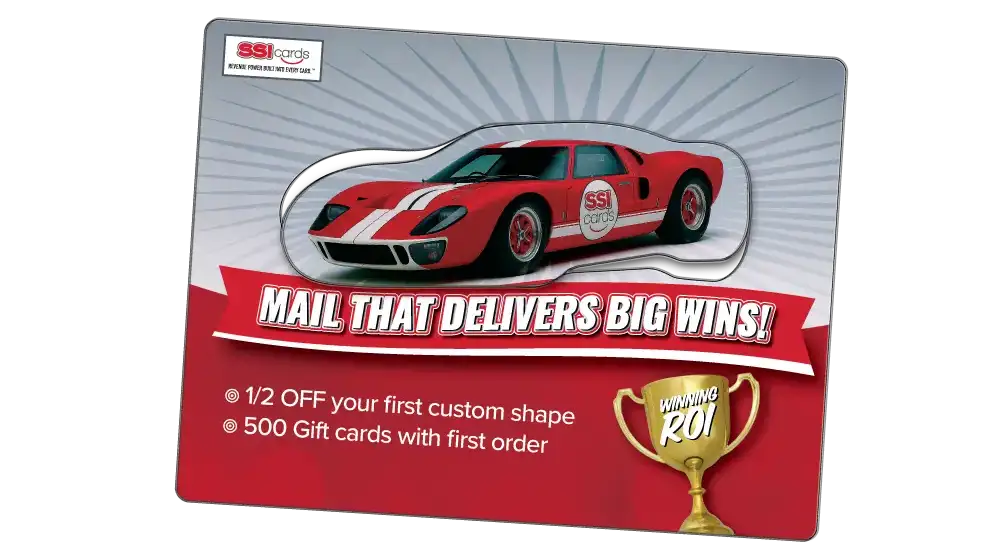
For example, a 40-location car wash customer used a targeted acquisition mailing that included new movers and households in selected high-potential neighborhoods. The campaign used an AcclaimMailer™ plastic postcard with a custom race-car-shaped $5-off break-off offer for in-person redemptions as well as a QR code for online membership enrollment.
The campaign generated 16,505 redemptions, 1,129 new memberships, and a reported 453% realized ROI through its four months of tracking new sales and memberships. In an industry report published by the International Carwash Association, Rinsed reported a 14.5-month median member lifetime, with averages of 13 months for car washes with fewer than 1,000 active members and 18 months for those with more than 5,000. Because membership revenue can continue beyond the four-month measurement period, the campaign’s lifetime ROI may have exceeded the reported 453% result. Read the full Car Wash Case Study.
The example illustrates an important point: acquisition mail does not have to mean generic mass prospecting. Targeting, offer, format, and follow-up can work together to produce a measurable customer-acquisition campaign.
Retention Direct Mail Also Works Well
Retention is no different from any other mailing. The list, offer, and format matter.
A regional grocer customer used a 5.5″ x 8.5″ AcclaimMailer™ direct mail postcard for loyalty-retention and win-back mailings targeting selected customers, including downward-trending shoppers and customers the business believed it had lost. For five years, this customer has reported a 25% average in-store redemption rate against a lofty goal of 10%.
Compared with the control group, the campaign consistently improved every key measure, including basket size and return-trip frequency. Read the full Super Acclaim Case Study.
The campaign also demonstrates why a retention list should not be limited to a business’s most active customers. Declining and inactive customers can represent opportunities for reactivation.
Planning a direct mail campaign? SSI Cards can help you evaluate the audience, offer, format, and mailing approach for your campaign. Request a Quote.

Why Mail Format Can Matter
A mail piece should be evaluated by more than how it looks when it leaves the press. Materials and construction can affect appearance, durability, handling, and whether the recipient has an easy way to keep and redeem an offer. Easy response and redemption beyond the first time a recipient handles the piece can extend the redemption window and contribute to stronger ROI.
The AcclaimMailer™ provides a laminated postcard format with wallet-friendly break-off cards designed to mimic the look and feel of a gift card. There’s no PVC, but it’s sometimes referred to as a plastic postcard. Wallet-friendly break-off offers can stay with a customer in a wallet or purse, giving the recipient another opportunity to redeem them later.
Some businesses refer to this type of format as a gift card mailer. The term should not imply stored value unless the campaign actually contains stored value.
In documented SSI Cards customer campaigns where laminated break-off formats were tested against paper postcards using the same or comparable list, artwork, and offer, customers have reported stronger response, redemption, and ROI with the laminated formats.
Customers have also reported redemptions continuing months after mailing and, in some cases, up to a year later, with recipients retaining wallet-friendly offers.
Traditional paper direct mail postcards can support both acquisition and retention. AcclaimLite™ provides a gloss or matte paper format with break-off offers and no plastic.
All SSI Cards direct mail postcards can accommodate multiple break-off offers, variable image printing, variable data printing, and custom die-cuts. For campaigns requiring up to 10 unique wallet-friendly offers in one laminated self-mailer, Acclaim10™ is specifically structured to provide the additional space. NVIO™ provides a landfill-biodegradable card option with wallet-friendly break-off offers.
Build a Hybrid Strategy
For many businesses, the answer is not choosing only new customers or only existing customers. It is coordinating both.
A local restaurant, for example, could send a loyalty offer to recent customers, a stronger win-back offer to guests who have become inactive, and a first-visit offer to nearby lookalike households.
A practical strategy can include:
- Loyalty offers for active customers.
- Win-back offers for lapsed customers.
- Lookalike-list mailings for acquisition.
- New mover campaigns.
- Geographic prospecting around a new location or service area.
- Separate tracking for each audience and offer.
For businesses that want a steady stream of new-customer mailings while maintaining separate loyalty and win-back efforts, AcclaimFlex™ provides a flexible, pay-as-you-go direct mail postcard subscription option.
Measure the Right Results
Printing is only one part of direct mail ROI. Total campaign cost can include list acquisition, data processing, design, printing, postage, fulfillment, offer cost, and follow-up.
The lowest-cost format does not necessarily equate to the most cost-effective option for gaining customers. If a higher-retention format produces stronger redemption or revenue with a comparable list and offer, a business can improve overall campaign ROI.
Track:
- Response and redemption rate.
- Cost per acquisition.
- Cost per repeat purchase.
- Revenue per mailed household.
- Average transaction value.
- Memberships, appointments, leads, or first visits.
- Repeat visits after redemption.
- Results over an appropriate redemption period.
Why Physical Mail Can Be Memorable
The physical nature of a mail piece can also influence how people interact with it. USPS research on direct-mail memorability found physical advertisements produced stronger memory and recall than digital advertisements in the study context.
For direct mail postcards and other physical formats, that makes production quality, handling, and usefulness worth considering alongside the message and offer.
Frequently Asked Questions
Does direct mail work better for new or existing customers?
Direct mail can work well for both. Existing customers have an established relationship, while acquisition campaigns can perform well when targeting and offers are carefully planned.
Is direct mail more effective for retention than acquisition?
Retention has the advantage of an existing relationship and customer data. Acquisition remains important for growth and can produce strong results with the right audience and offer.
Can direct mail win back inactive customers?
Yes. A win-back campaign can target customers who have become inactive or whose purchasing has declined, giving them a relevant reason to return.
What is a lookalike list in direct mail?
A lookalike list is a prospect audience selected because its characteristics resemble those of a business’s best customers. It can help focus acquisition spending on similar households.
Should new-customer and existing-customer mailers look different?
They can share the same brand identity, but the message and offer should reflect the audience. Prospects need a reason to try the business, while existing customers can receive more personalized offers.
How should a business measure acquisition and retention mail?
Use separate offer codes, QR codes, landing pages, or other identifiers. Measure cost per acquisition for prospecting and repeat purchases, reactivation, and revenue for retention.
Key Takeaways
Existing-customer mail can benefit from recognition, trust, and customer data. New-customer mail can build growth when targeting, offers, creative, and follow-up are carefully planned.
Loyalty and win-back campaigns can work alongside acquisition campaigns rather than replacing them. Lookalike audiences can extend the profile of a business’s best customers into new markets.
The most useful strategy is to match the audience, offer, format, and measurement approach to the business objective.
To discuss a direct mail strategy for acquisition, retention, or a combination of both, Request a Quote.
By Sean Goade
Executive VP | SSI Cards Marketing & Direct Mail
About the Author
Sean Goade is Executive VP of SSI Cards Marketing & Direct Mail. He specializes in helping businesses leverage high-impact direct mail strategies, gift cards, and loyalty solutions to drive customer engagement, retention, and growth.