
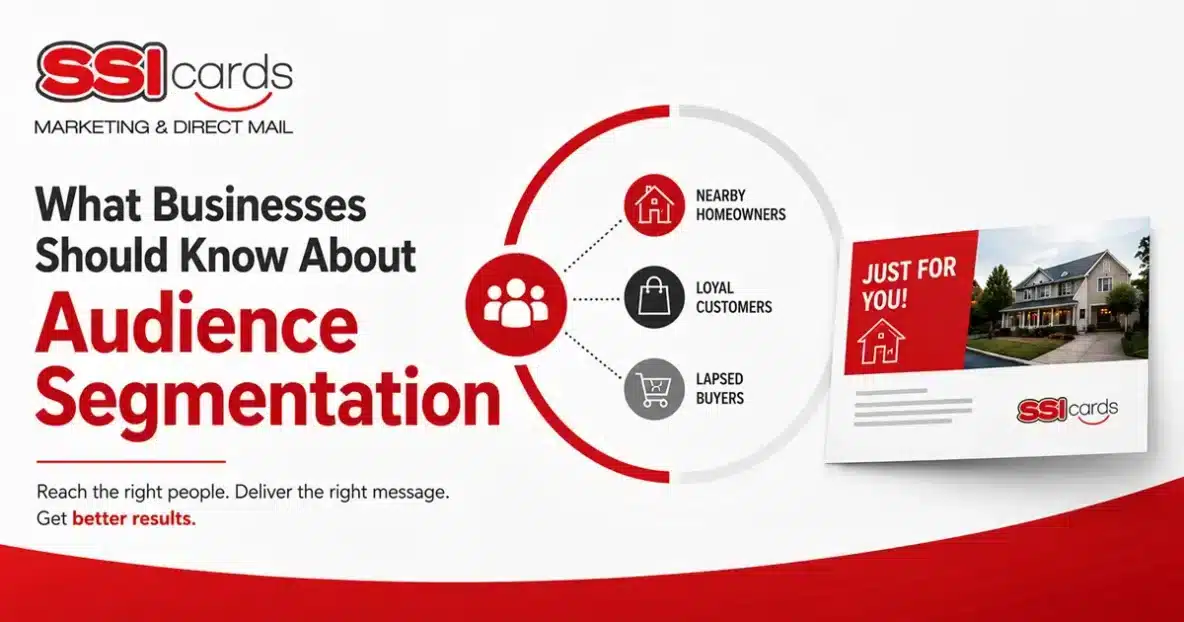
Audience segmentation is the practice of dividing customers or prospects into groups based on shared traits so marketing messages can be more relevant to each group. Instead of treating everyone on a list the same way, businesses sort people by location, past purchases, or other meaningful characteristics and adjust the communication accordingly.
For small and local businesses in the United States, segmentation matters because marketing budgets are limited. A generic message sent to every address or email often wastes money on people unlikely to respond. Segmentation helps put more of those limited resources in front of people who are more likely to care. This article explains what audience segmentation means, why it matters, the main ways U.S. businesses group their audiences, where the data comes from, common mistakes, and how to start without a large team or budget.
Key Points
- Audience segmentation helps businesses reach the people most likely to respond by grouping customers and prospects based on meaningful characteristics and behaviors.
- Effective segmentation starts with accurate customer data, a clear objective, and a message that changes based on the audience.
- Behavioral segmentation often reveals stronger buying signals than demographics alone because it reflects actual customer actions.
- Direct mail performance improves when businesses segment who receives the mailing, the offer they receive, and the format used.
- Start simple: begin with a few practical groups, test, and refine.
What Audience Segmentation Actually Means
Audience segmentation, also called customer segmentation or market segmentation, is the act of organizing people into groups that share something in common so the marketing sent to them feels more relevant. Without it, a business treats a first-time visitor the same as a long-time loyal customer, or a nearby homeowner the same as someone 40 miles away. The result is usually a generic message that does not speak strongly to anyone.
With segmentation, the offer, tone, images, or call to action can change so each group receives something more likely to matter. The goal is not dozens of tiny groups. For most small and local U.S. businesses, a few practical groups are enough to improve response and make better use of every marketing dollar.
Why It Matters
Most small and local businesses in the United States do not have unlimited marketing budgets or large teams. Every dollar spent reaching someone who was never going to buy is a dollar that could have been spent reaching someone who might. Segmentation helps businesses improve efficiency by focusing resources on audiences with a stronger connection to the offer. Existing customer lists, geographic targeting, and carefully selected prospect audiences can all be valuable depending on the campaign objective.
Better Response Rates and Less Wasted Spend
When a business messages a well-defined group instead of a broad list, response rates often improve while the cost per response decreases. By focusing on people who are more likely to be interested in the offer, businesses can use their marketing budgets more efficiently. For a local U.S. business, that can mean reaching fewer people while still generating more customers or redemptions.
More Relevant Messaging Across Every Channel
Once a business knows who a segment is, writing copy, choosing offers, and selecting images becomes clearer. A message aimed at recent buyers can focus on loyalty. A message aimed at lapsed customers can focus on a win-back incentive. The same logic applies to email, social ads, and direct mail.
Common Segmentation Types
Most practical strategies used by small and local U.S. businesses fall into a few clear categories. The best starting point is usually the one easiest to apply with the data already on hand.
Demographic and Geographic Segmentation
Demographic segmentation groups people by traits such as age range, household income, presence of children, or homeownership. Geographic segmentation groups them by location, such as ZIP code, radius around a store, carrier route, or neighborhood. For a local U.S. business, geographic segmentation is often the easiest starting point because trade areas are limited. Geographic segmentation can be refined using tools such as U.S. Census Bureau demographic data, while USPS resources such as Notice 123 help businesses understand mailing prices and requirements when planning campaigns. Combining a simple demographic filter, for example homeowners within five miles, with a geographic one improves relevance without sophisticated software.
Behavioral and Purchase-Based Segmentation
Behavioral segmentation looks at what people have actually done, such as visit frequency, recency of purchase, average order value, or response to previous offers. These segments often predict future behavior more accurately than demographics alone. Many small U.S. businesses already track this in a point-of-sale system, loyalty program, or spreadsheet.
Where Data Comes From
A small or local U.S. business does not need a large data platform to begin. Realistic sources include point-of-sale or CRM records, house mailing or email lists built from sign-ups or past transactions, loyalty program data, basic public or purchased list data for geographic or demographic filters, and website or email engagement records for digital channels.
Clean, current data matters more than large volumes of stale data. A modest, accurate house list usually outperforms a larger outdated one. Be transparent about how information is used, honor opt-outs, and stay aware of applicable guidelines, including the FTC CAN-SPAM Act Compliance Guide for Business for commercial email. This is not legal advice.
Common Mistakes
Three common pitfalls reduce the value of segmentation:
- Over-segmenting into groups too small to act on or measure. Two or three meaningful segments usually beat ten tiny ones.
- Relying on stale data. Addresses change and purchase patterns shift. Outdated lists waste postage and lower response rates.
- Segmenting without changing the message. Groups are useful only if the offer, copy, or creative actually differs by group.
How to Start
The most practical way for a small or local U.S. business to begin is with data already on hand. Pull two or three segments from the existing customer list, such as recent buyers versus lapsed buyers, customers within a store radius versus those farther away, or high-frequency versus occasional visitors.
Test one clear change in messaging or offer for each segment. Measure the response. Keep what works and expand only after results appear. This requires no expensive software and fits a limited budget. Treat the first effort as a controlled test.
Direct Mail Application
The same segments improve results in email, social advertising, and direct mail. Once defined, a segment can receive a tailored email, a lookalike audience on social, and a targeted mail piece.
Direct mail is a channel where segmentation has an especially direct effect on targeting and cost. Postage is often the largest expense, so reaching fewer, better-matched addresses can lower total spend while raising response. USPS research, including studies conducted with Temple University’s Center for Neural Decision Making, found that physical advertisements create stronger memories and lasting impressions because recipients physically interact with them. USPS Delivers: Why Direct Mail Is More Memorable.
Laminated postcards with wallet-friendly break-off cards, such as the AcclaimMailer™, are designed to stand out in the mailbox and extend the life of the offer beyond the initial delivery. Because the break-offs are sized for wallets and daily use, recipients have a practical reason to keep them instead of immediately discarding the piece. Similar options exist in eco-friendly NVIO™ and AcclaimLite™ paper formats. Traditional paper postcards remain available for basic needs.
For ongoing campaigns, AcclaimFlex™ offers a pay-as-you-go approach, and the Acclaim10™ is a laminated self-mailer featuring 10 unique wallet-friendly break-off offers in one mailing. Specific campaigns using high-retention formats on segmented lists have reported results such as a regional grocer sustaining a 25% average redemption rate over five years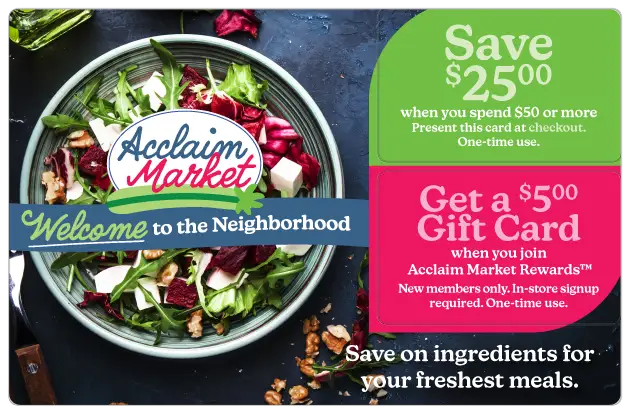
and a national car wash chain delivering 450% ROI across 40 locations in four months. Those are individual case results, not industry-wide guarantees.

Direct mail and digital marketing often produce stronger results when used together. Physical mail creates lasting impressions, while digital tools such as QR codes, personalized URLs, and USPS Informed Delivery can add a digital preview of incoming mail and create an additional interaction before the physical piece arrives.
FAQs
What is audience segmentation and why does it matter for a small business?
It is dividing customers or prospects into groups that share common traits so marketing can be more relevant. It matters because it reduces money spent on people unlikely to respond and improves response from those more likely to buy.
What are the main types of audience segmentation?
The most practical types are demographic, geographic, behavioral, and needs- or interest-based. Most local U.S. businesses start with geographic and behavioral segments because the data is often already available.
How is audience segmentation different from just having a customer list?
A customer list is a collection of contacts. Segmentation organizes it into groups and changes the message or offer for each. Without that change, the list remains one undifferentiated audience.
What data does a business need to segment its audience effectively?
Basic purchase history, visit frequency, location, and contact details from a POS system, loyalty program, or house list are usually enough. Clean current data is more important than large incomplete records.
Is audience segmentation worth the effort for a small or local business with a limited budget?
Yes, when kept simple. Starting with two or three segments and testing one message difference typically improves efficiency.
How many segments should a small business start with?
Two or three is practical. That gives enough room for meaningful message differences while keeping testing manageable.
Can audience segmentation improve direct mail and other offline marketing?
Yes. It improves list selection and message relevance for direct mail, which affects postage efficiency and response rates. The same groups can also guide in-store promotions and other offline efforts.
What tools do small businesses use to segment their audience?
Many begin with reporting features in their POS system, email platform, or a spreadsheet. Advanced CRM tools can help as volume grows, but they are not required to start.
By Sean Goade
Executive VP | SSI Cards Marketing & Direct Mail
About the Author
Sean Goade is Executive VP of SSI Cards Marketing & Direct Mail. He specializes in helping businesses leverage high-impact direct mail strategies, gift cards, and loyalty solutions to drive customer engagement, retention, and growth.