

Key Points
- Direct mail for summer events helps businesses reach consumers before peak seasonal demand begins
• Direct mail campaigns perform best when timed in multiple stages before and after local events
• Format matters more than postcard size when it comes to retention, redemptions, and ROI
• Targeting the right target audience improves direct mail performance and overall campaign results
• Seasonal direct mail campaigns increase visibility during high‑traffic summer months
• The ability to measure direct mail using QR codes and offer tracking improves campaign optimization
• High‑quality print materials and compelling offers drive stronger engagement and repeat visits
• Successful direct mail campaigns rely on retention‑focused formats and event‑specific offers
Summer Events and Local Festivals as High‑Conversion Windows
Summer events and local festivals bring together highly motivated, high‑spending audiences who are actively seeking experiences, food, entertainment, and nearby businesses to explore. For local companies, this is one of the few seasonal moments where consumer intent is already elevated before marketing begins.
The businesses that win these windows are not the ones with the most visibility, but the ones whose offers stay physically present in the customer’s decision process long enough to be acted on. Direct mail creates a physical, high‑retention touchpoint that digital channels cannot match. It remains visible on counters, refrigerators, and in wallets during the entire decision cycle, which is what makes it one of the most effective tools for event‑driven marketing.
Direct mail marketing continues to outperform many digital channels because it is tangible, persistent, and action-oriented. Well‑planned direct mail campaigns create multiple engagement opportunities at critical decision points, driving measurable increases in foot traffic and conversions.
While postcard size often gets attention, format and retention matter far more than dimensions alone. A well‑designed piece that stays in a customer’s wallet or visible space will consistently outperform a larger but disposable format.
Why Summer Events and Festivals Drive Immediate Demand
Warm weather increases mobility, discretionary spending, and spontaneous purchasing. People attend festivals ready to try new businesses, redeem offers, and explore local options.
A strategic summer marketing campaign aligns with this behavior by influencing decisions during three stages:
- Before the event (planning phase)
- During the event (on‑site decision making)
- After the event (follow‑up behavior)
Direct mail stands out because it reaches consumers before the event rush begins. It remains visible in the home, influences pre‑event planning, and supports post‑event follow‑up. This creates a compounding effect on direct mail performance across the entire seasonal window.
The biggest risk in seasonal marketing is not overspending on direct mail but investing in formats that are quickly discarded or forgotten. If the offer is not physically retained, it is far less likely to influence planning decisions, be available at the moment of redemption, or drive a return visit after the event. Retention is what extends the life of the offer, and ultimately, what determines whether interest turns into measurable action.
How to Identify the Right Local Events
Not every event will attract your ideal target audience. Strong direct mail campaigns begin with precise alignment.
Evaluate opportunities based on:
- Demographics and spending behavior
- Event themes aligned with your offerings
- Proximity to your business
- Vendor or sponsorship opportunities
- Historical attendance and community engagement
A smaller, highly relevant event often outperforms a larger but less targeted one. When your direct mail efforts align with the correct target audience, engagement rates and redemption rates improve significantly, and overall direct mail performance increases predictably.
Planning Your Marketing Strategy Ahead of Event Season
 Timing is one of the most important drivers of direct mail campaign performance. Consumers often plan their event schedules in advance, which means your messaging must arrive early enough to influence intent.
A proven structure includes:
- Awareness mailers 3 to 6 weeks before the event
- Reminder mailers 1 to 2 weeks prior
- Post‑event follow‑ups to drive repeat visits
This cadence improves recall, strengthens direct mail performance, and allows businesses to measure direct mail effectiveness across multiple touchpoints. Seasonal direct mail campaigns that follow this structure consistently outperform single‑send approaches because they reinforce intent rather than attempt to create it once.
How to Attract Event Attendees to Your Business
 Visibility alone is not enough. Direct mail must drive action at the moment of decision.
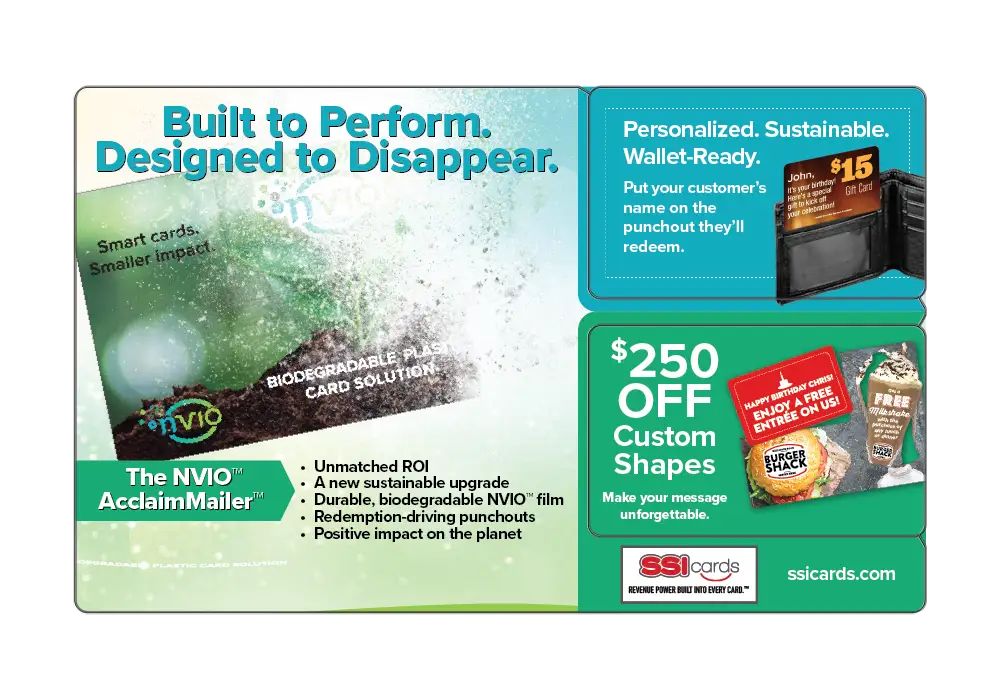
This is where format becomes critical. Retention‑driven design changes behavior. A highly functional format equipped with a pop-out that is easily stowed in a wallet, like a gift card, outperforms larger paper‑based mailers that are quickly forgotten and discarded. Even when postcard size varies, retention is what drives conversions, not surface area. Businesses often achieve stronger ROI from fewer, higher‑quality direct mail pieces than from larger volume, lower‑retention formats.
For environmentally focused campaigns, NVIO™ provides biodegradable options without sacrificing durability. For traditional paper‑based approaches, AcclaimLite™ offers a retention‑focused design that outperforms standard oversized postcards. For maximum retention and redemption rates, the AcclaimMailer™ remains the strongest option due to its unique presence that resembles a gift card in look and feel. Each option can be produced in custom sizes and shapes while maintaining wallet‑friendly pop‑outs that extend retention.
Pre‑Event Promotion That Shapes Behavior Early
Direct mail is not just a response tool, it is a planning influence tool.
Effective pre‑event promotions include:
- Limited‑time offers tied to festival dates
- Early‑access or VIP incentives
- Bounce‑back coupons valid during or after the event
Visibility in the mailbox matters, but retention and ease of redemption are what drive high conversions. At this stage, formats with wallet-friendly pop-outs are more important than postcard size, just as targeting and personalization are more important than volume. This combination is what drives early‑stage direct mail performance improvements.
Targeting the Right Audience for Maximum Efficiency
Direct mail for summer events performs best when precision targeting is used instead of broad distribution.
Focus on:
- Households within a defined geographic radius
- Demographic segments aligned with your offer
- Past customers or loyalty members
- Behavioral or interest‑based lists
A clearly defined target audience consistently produces stronger results than broad outreach. Direct mail marketing campaigns that prioritize targeting reduce wasted impressions and improve ROI by increasing conversion efficiency.
Event‑Specific Offers That Increase Foot Traffic
Generic offers underperform in high‑activity environments like festivals. The most effective offers feel time‑bound and specific to the event:
- “Show this during festival weekend for a special offer”
- “Free item with purchase for event attendees”
- “Limited‑time festival bundle pricing”
For multi‑segment audiences, multi‑offer formats allow broader appeal within a single campaign. The Acclaim10™ is ideal for this because it supports up to ten unique, wallet-friendly offers in one self-mailer.
Design for Attention and Retention
Festivals are visually crowded, so your direct mail must establish clarity quickly.
High‑performing print materials share:
- Strong visual hierarchy
- Clear and immediate offer comprehension
- Bold but simple messaging
- High‑retention physical design
Postcard size alone does not determine success. A structured, keepable format consistently outperforms larger but less functional designs. Retention remains the primary driver of direct mail performance.
Partnerships, QR Codes, and Data Capture
Direct mail becomes significantly more powerful when combined with digital integration and partnerships.
QR codes can:
- Drive event‑specific landing pages
- Enable mobile redemption
- Capture customer data
- Link physical mail to digital behavior
Partnerships with local vendors or organizers expand reach and reduce acquisition cost while strengthening campaign visibility. Businesses that measure direct mail consistently gain deeper insight into consumer behavior and improve future targeting accuracy.
Post‑Event Follow‑Up and Long‑Term Growth
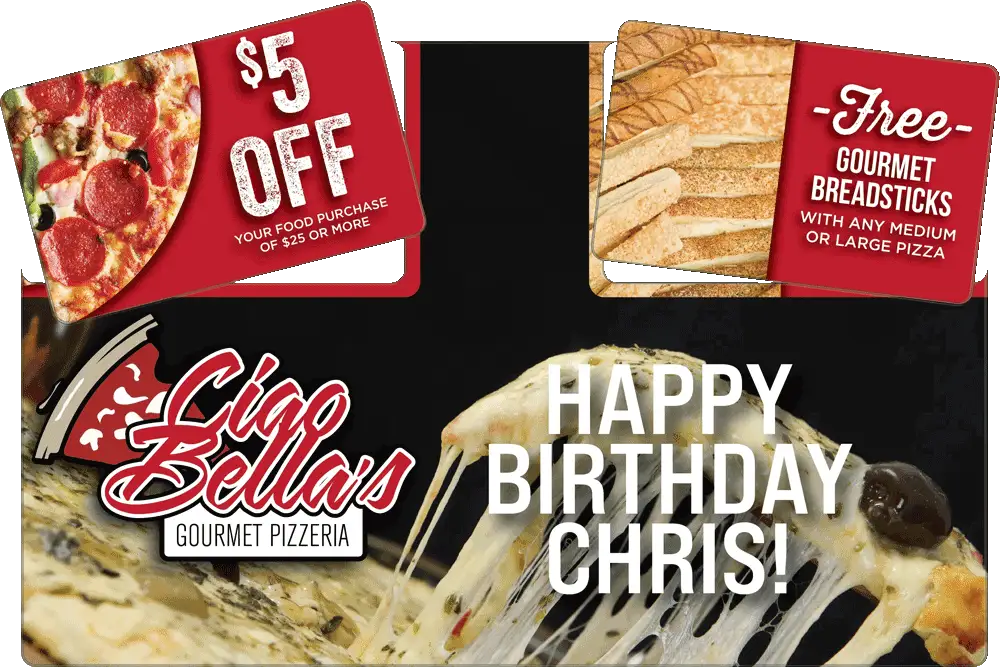 Many businesses stop after the event, losing what can be the highest ROI phase of the campaign.
Effective follow‑ups include:
- “Thank You” mailers with bounce‑back offers
- Personalized incentives based on engagement
- Invitations to future seasonal campaigns
This is where short‑term traffic becomes long‑term customer value. Programs that support ongoing outreach outperform one‑time campaigns because they stabilize acquisition flow across the entire season. The AcclaimFlex™ subscription direct mail program is designed specifically for this purpose.
Measuring Success
To measure direct mail effectively, establish benchmarks before launch:
- Redemption rates
- Incremental revenue
- Cost per acquisition
- Return on investment
- Customer retention
Tracking tools like QR codes and unique codes make it possible to measure direct mail performance accurately and improve future direct mail campaigns. Businesses that measure consistently improve outcomes over time because they refine targeting, timing, and offer structure.
Common Mistakes to Avoid
- Sending too early or too late
- Using generic messaging and lacking personalization
- Overemphasizing postcard size instead of retention
- Ignoring post‑event follow‑up
- Using formats that are not designed for retention
A structured, retention‑focused approach consistently outperforms volume‑driven strategies.
Turning Seasonal Traffic into Long‑Term Growth
The goal of direct mail for summer events is not just immediate foot traffic, but sustained customer growth.
The most effective strategies focus on:
- Retention‑focused formats
- Consistent seasonal direct mail campaigns
- Data‑driven targeting and refinement
When timing, targeting, and retention are aligned, seasonal spikes become predictable revenue channels rather than isolated events.
Final Thoughts
Summer events create high‑opportunity environments, but competition is intense. Direct mail provides a proven method to reach the right audience before decisions are made, influence behavior during peak moments, and extend engagement after the event ends.
While postcard size may be discussed frequently, it is the format, durability, and retention value that determine success. Businesses that prioritize retention‑focused design, strong targeting, and structured timing consistently achieve stronger results than those relying on volume alone.
When executed correctly, direct mail becomes not just a campaign tool, but a predictable engine for seasonal growth and long‑term customer acquisition. Successful direct mail campaigns consistently leverage timing, targeting, and retention‑focused formats to maximize results.
By Sean Goade
Executive VP | SSI Cards Marketing & Direct Mail
About the Author
Sean Goade is Executive VP of SSI Cards Marketing & Direct Mail. He specializes in helping businesses leverage high-impact direct mail strategies, gift cards, and loyalty solutions to drive customer engagement, retention, and growth.