

Key Points
- Direct mail for restaurants provides a tangible, high-impact way to reach customers during slow months.
- Premium print materials like AcclaimMailer™, AcclaimLite™, and NVIO™ biodegradable postcards increase retention and redemption rates.
- Loyalty cards and key tags help turn first-time diners into repeat customers and support long-term revenue.
- Targeted campaigns, including birthday mailings and behavior-based lists, maximize ROI by reaching the right diners at the right time.
- Slow-season offers such as midweek incentives, group packages, prix fixe menus, and gift card bonuses drive measurable traffic.
- Combining direct mail and loyalty programs creates a full-cycle strategy of acquisition, retention, and reactivation.
- Tracking redemption codes, QR codes, and loyalty data allows restaurants to measure effectiveness and refine future campaigns.
- Seasonal messaging and professional design with high-quality images make offers more appealing and memorable.
How Restaurants Can Use Direct Mail & Loyalty Cards to Fill Tables During Slow Months
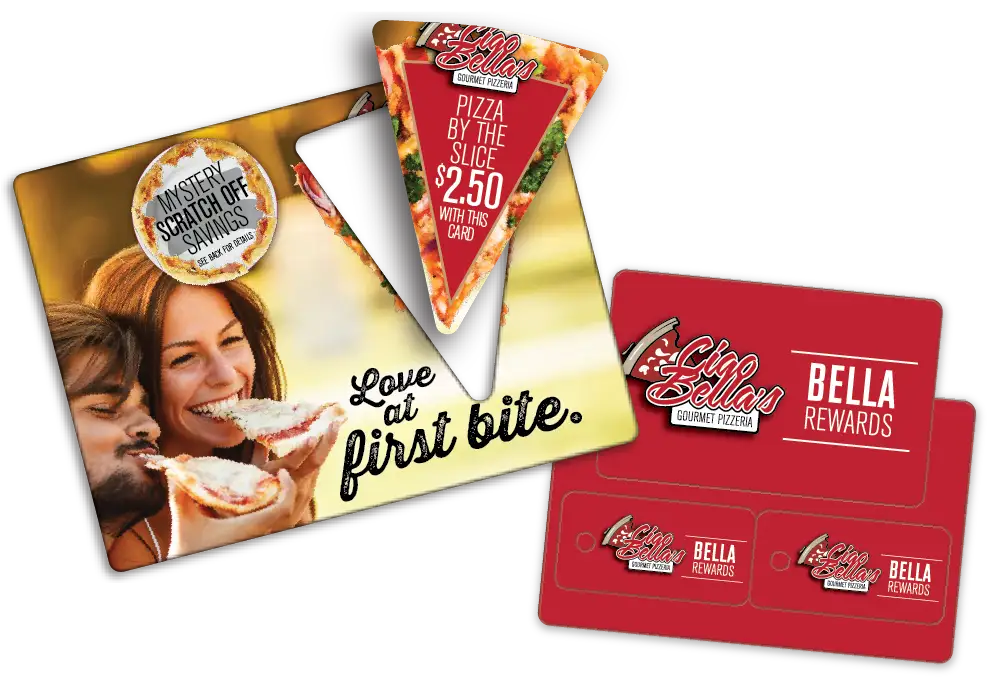 Every restaurant faces predictable traffic swings each year. Winter brings post-holiday spending cutbacks. Late summer suppresses weekday dining as families travel. Spring and fall fluctuate depending on local events, weather patterns, and school schedules. These seasonal lulls often leave operators searching for reliable ways to maintain foot traffic and protect margins. The most consistent solution is combining direct mail for restaurants with a well-built loyalty program designed to motivate repeat, and lucrative, visits.
Even though digital advertising dominates marketing budgets, customers are increasingly saturated with online noise. Inboxes overflow with promotions. Social feeds refresh every few seconds. Direct mail cuts through this clutter because it delivers a tangible offer diners can physically hold, save, display, and redeem. When restaurants support direct mail with loyalty cards that track customer behavior and rewards their frequency, a predictable system that fills tables during the weakest months of the year is the result.
This guide shows how to use direct mail, loyalty systems, and premium print materials to maintain steady revenue during slow months, increase repeat business, and target ideal customers with precision.
Why Restaurants Struggle with Slow-Season Traffic
Seasonal dips are not random or unavoidable. They follow predictable consumer behavior patterns that can be countered with the right marketing tools.
Common slow-season challenges include:
Reduced discretionary spending. After major holidays, customers cut back on dining out. A direct mail campaign that highlights value, comfort, or bundled meals can reactivate diners more effectively than digital ads alone.
Weather-related inactivity. Cold weather and shorter days reduce diners’ willingness to go out. Direct mail pieces remain visible in the home, giving restaurants more staying power than emails that disappear within hours.
Travel cycles. Summer vacations and student migrations create dips in local spending. Targeted household mailings allow restaurants to reach the customers who remain local.
Weekday and off-peak gaps. Even strong restaurants see dips on Mondays, Tuesdays, or mid-afternoons. These gaps are ideal for slow-season offers such as midweek promotions or loyalty double-point incentives.
Understanding these patterns allows restaurants to schedule restaurant direct mail marketing around the exact weeks when customers need the strongest motivation.
How Direct Mail Drives More Diners During Slow Months
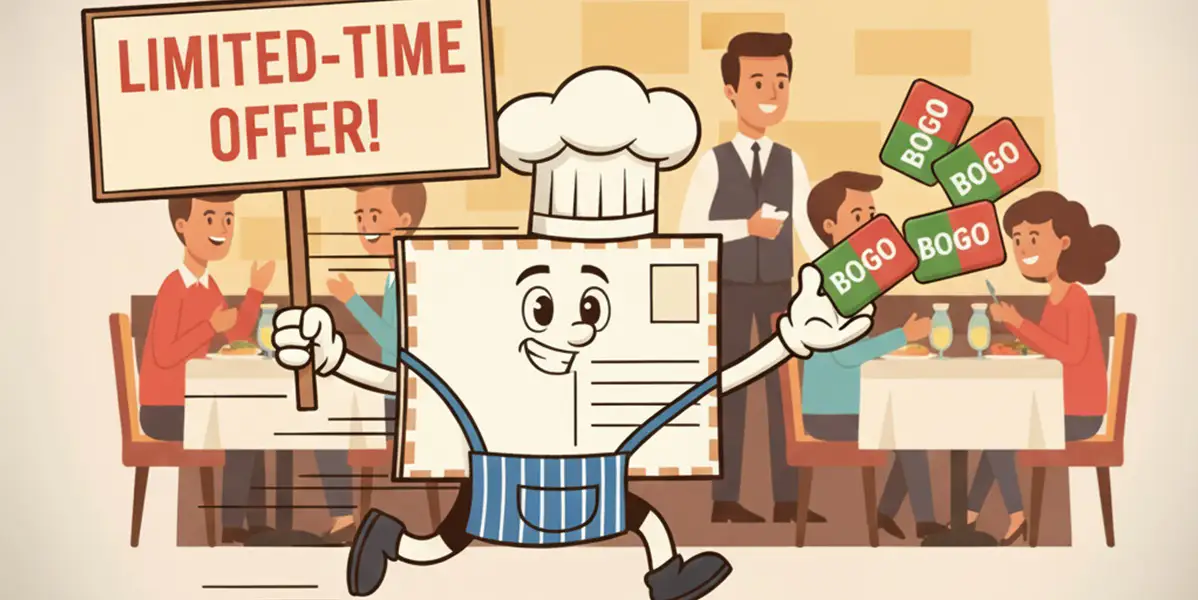 Direct mail remains one of the highest-converting channels because it provides physical presence and emotional weight. Customers treat printed offers more seriously than digital ones because they feel more personal and valuable.
Premium materials amplify this effect. The laminated AcclaimMailer™ pop-out direct mail plastic postcard is a proven driver of redemption rates because it includes detachable coupons resembling real gift cards that are simply stowed in a wallet, ready to redeem at a moment’s notice. Restaurants consistently report higher retention when a piece feels substantial in the hand, such as the Acclaim lineup of “pop-out” postcard products do.
For sustainability-focused restaurants, NVIO™ biodegradable plastic postcards deliver the same premium performance while reducing environmental footprint by showing accelerated rates of biodegradation in landfill conditions. Eco-conscious brands often prefer them because they align with customer expectations, without sacrificing results.
For restaurants seeking the same performance without lamination, AcclaimLite™ pop-out postcards offer a strong alternative. The gloss or matte finish elevates brand presentation while still allowing for wallet-friendly pop-out coupons that diners save at high rates.
The longevity of wallet-friendly pop-out coupons is a major advantage during slow months. Customers frequently save offers indefinitely, not unlike gift cards, allowing restaurants to have ongoing visibility in wallets or on counters and desks. A piece that stays with the recipient for thirty days or more provides numerous opportunities for redemption.
Restaurant Offers That Work Best in Slow Seasons
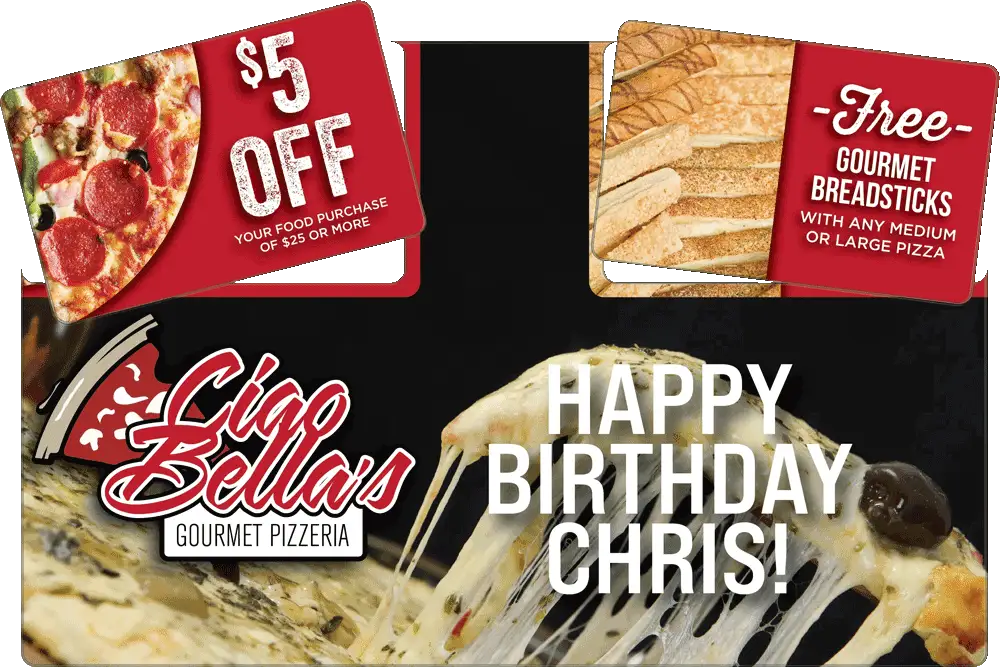 The right offer transforms a simple postcard into a revenue generator. During slow seasons, diners respond best to promotions that feel substantial, personal, or exclusive. When delivered through a premium plastic postcard, redemption increases significantly.
High-performing slow-season offers include:
- High-value bounce-back coupons. A detachable coupon on a plastic postcard mailer is perceived as more valuable than a printed coupon.
- Midweek incentives. Offers valid from Sunday to Thursday increase traffic during historically slower periods.
- Prix fixe menus. Pre-set bundles simplify decision-making and appeal after heavy holiday spending.
- Family and group packages. Offering free shared appetizers or kid meals encourages larger party sizes.
- Birthday incentives. Targeted AcclaimMailer™ Birthday Mailings consistently deliver because diners respond strongly to personalized birthday offers.
- Gift card bonuses. Value-add gift cards such as “Buy $50, get $10 extra” encourage future visits and boost revenue during quiet periods.
These offers perform better when printed on premium print materials. Delivering a tangible, high-value item increases retention and drives actual traffic.
Using Loyalty Cards to Encourage Repeat Visits
 Loyalty programs are the long-term stabilizer that complements the immediate boost from direct mail. Programs using durable physical cards or key tags outperform app-only systems because they stay visible in wallets or on key rings and encourage habitual use.
Benefits of loyalty programs include:
- Visit frequency growth. Points, rewards, or tier systems motivate repeat visits during slow months.
- Behavioral data. Each swipe or scan reveals customer habits, improving future segmentation for direct mail campaign drops.
- Higher lifetime value. Customers carrying loyalty cards or key tags end up spending more over longer periods of time because they feel connected to the brand.
- Predictable reactivation. Restaurants can send direct mail pieces to customers who have not visited in a defined period, creating efficient re-engagement.
SSI’s loyalty cards and key tags are made with Teslin®, providing strength, flexibility, and wallet durability. Teslin® consistently outperforms PVC, which can crack or delaminate under everyday use.
When paired with direct mail, loyalty cards turn initial redemptions into repeat revenue and higher lifetime value.
Combining Direct Mail and Loyalty Programs for Maximum Impact
Restaurants see the strongest results when direct mail is combined with loyalty cards or key tags in an integrated system. This creates a loop of acquisition, enrollment, retention, and reactivation.
A proven multi-step approach is:
- Acquire. Send a direct mail campaign that includes a compelling offer.
- Enroll. When the customer redeems the offer, enroll them in the loyalty program and issue a loyalty card or key tag.
- Reward. Drive repeat visits through points, tiers, or recurring value.
- Reactivate. Send targeted direct mail pieces to members who have become inactive. These drops are efficient because they reach customers who already know the brand.
- Upsell. Loyalty data reveals high spenders and frequent diners who may respond to premium offers or group promotions.
This closed-loop approach makes every plastic postcard mailer more productive by extending customer value beyond a single visit. Here is a short video of how mail, loyalty cards, and gift cards work together to boost sales and max your ROI (if you don’t want to sit through YouTube ads, we don’t blame you… the video is also on our home page just under, “Revenue-generating power in every gift card, mailer, and loyalty card”).
Targeting the Right Diners with Smart Mailing Lists
 Targeting determines campaign efficiency. Sending direct mail pieces to the wrong households wastes money, but mailing to the right target audience produces excellent ROI.
Key targeting methods include:
- House databases. Loyalty records, POS history, online ordering systems, and reservation platforms provide the most accurate targeting.
- Geographic radius targeting. Restaurants often mail to a specific radius near their location, depending on suburban or urban density. 3-5 miles is a general rule of thumb, but it will vary. Higher ROI mailings tend to be closer as those customers are likely to frequent more often and don’t require such large incentives to motivate them.
- Demographic criteria. Income, household size, age, and lifestyle filters help refine prospect lists for the best match.
- Behavior-based targeting. Restaurants can send direct mail to customers who used to visit but have not returned in 60 to 180 days.
- Birthday targeting. Specialized lists that identify upcoming birthdays allow restaurants to capture celebratory bookings. Birthdays are effectively a free holiday as there’s little to no competition.
The better the targeting, the fewer pieces needed to drive strong results, the greater the ROI.
Design Tips for High-Converting Restaurant Mailers
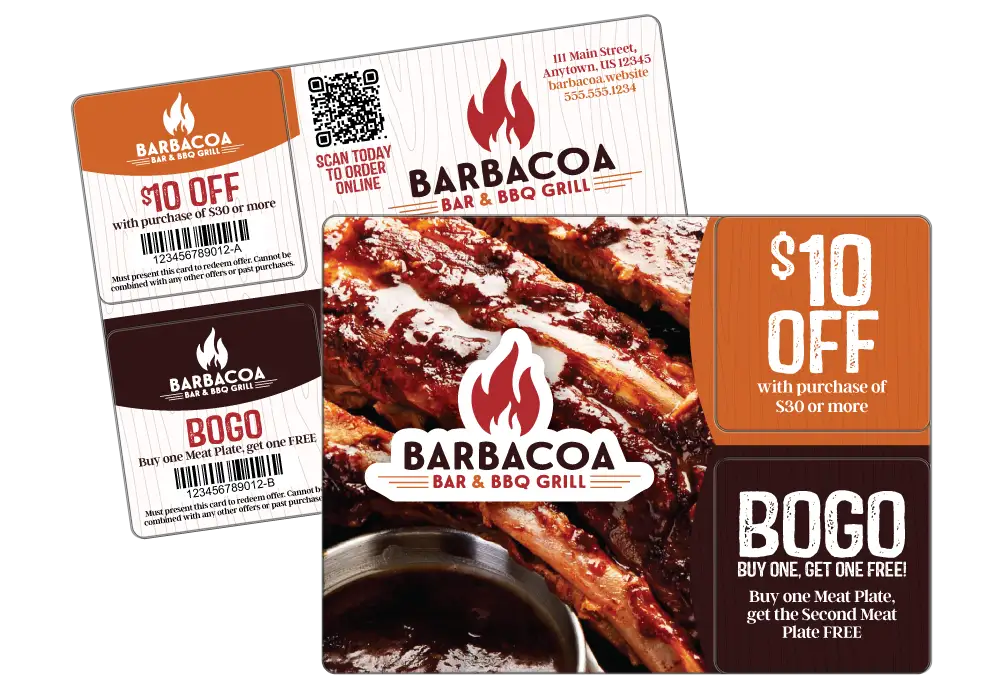 Direct mail design determines whether a customer notices the offer or discards the piece. A restaurant should prioritize clarity, simplicity, and appetite appeal.
Essential design principles include:
- Use high quality images. Professional food photography dramatically increases response rates. Dishes should look fresh, vibrant, and easy to crave. These images print especially well on plastic postcard surfaces.
- Emphasize the offer. The strongest value should be visible within one second. Large type, bold numbers, and clear instructions help recipients understand what they are receiving.
- Use premium materials. Customers perceive laminated plastic postcard mailers as more valuable. Their unique presence communicates importance and value.
- Make redemption frictionless. Clear instructions, short steps, and detachable elements increase the likelihood of use.
- Brand consistency. Match colors, typography, and tone to the restaurant’s core branding to reinforce recognition.
A strong direct mail design turns a good offer into a high-performing campaign.
Seasonal Messaging Ideas for Slow Months
Seasonal messaging helps customers connect emotionally and contextually with the offer.
Examples include:
- Winter. Promote warm comfort foods, cozy dining, or value-driven prix fixe menus.
- Post-holiday weeks. Encourage “reset meals,” healthy bowls, or affordable family dinner bundles.
- Summer. Highlight cool drinks, outdoor seating, refreshing dishes, and travel-friendly takeout.
- Back-to-school. Appeal to busy families seeking quick meals or weeknight specials.
- Early fall. Showcase seasonal flavors and nostalgia-driven dishes.
- Weekday slumps. Create midweek boosters or double-point days for loyalty members.
Seasonal messaging integrated with direct mail produces stronger emotional responses than generic promotions.
Tracking Response Rates and Measuring ROI
 Tracking determines how well a direct mail campaign performs and how to improve future drops.
Best practices include:
- Unique redemption codes. Assign different codes to each campaign to measure traffic and revenue.
- QR codes. Link scans to online ordering or booking pages to capture digital conversions from mailers.
- Physical mailer return. Require customers to bring the piece or detachable coupon, ensuring accurate attribution.
- Loyalty integration. Track activity through loyalty cards to measure lifetime value and repeat visits.
- Revenue comparison. Compare revenue during slow periods with and without mailings to measure direct mail impact.
Plastic postcard mailers with detachable components are especially effective because they create physical proof of redemption, improving reporting accuracy.
Final Thoughts
Direct mail for restaurants is one of the most powerful ways to overcome slow-season traffic declines. When combined with loyalty cards, behavioral data, and premium print materials, restaurants gain a predictable strategy for filling tables throughout the year. High-quality offers printed on durable plastic postcard mailers or eco-friendly alternatives like NVIO™ biodegradable plastic postcards consistently outperform digital-only advertising. Programs such as AcclaimMailer™, AcclaimLite™, targeted Birthday Mailings, and Loyalty Cards and Key Tags help restaurants maintain visibility, retain customers, and drive measurable ROI during the slowest periods.
By Sean Goade
Executive VP | SSI Cards Marketing & Direct Mail
About the Author
Sean Goade is Executive VP of SSI Cards Marketing & Direct Mail. He specializes in helping businesses leverage high-impact direct mail strategies, gift cards, and loyalty solutions to drive customer engagement, retention, and growth.